Building a Strategic Career Plan: Your 12-Month Roadmap for 2026
Advertisements
Building a strategic career plan involves a detailed 12-month roadmap, focusing on goal setting, skill development, and networking for professional growth.
Are you ready to take control of your professional future? In today's dynamic job market, merely reacting to opportunities isn't enough. It's time to be proactive and intentional. This article will guide you through building a strategic career plan for 2026, offering a comprehensive 12-month roadmap designed to help you achieve your professional aspirations.
Understanding the 'Why' Behind Your Career Plan
Before diving into the specifics of a 12-month roadmap, it's crucial to understand the fundamental motivations driving your career choices. A strong 'why' provides clarity and resilience, especially when facing challenges. This initial introspection forms the bedrock of a truly effective strategic career plan.
Reflecting on your core values, passions, and long-term vision is not just a philosophical exercise; it's a practical step that informs every subsequent decision. Without this foundational understanding, even the most meticulously laid plans can feel hollow or unsustainable.
Identifying your core values and passions
Your values are the guiding principles that dictate your behavior and choices. In a career context, they influence the type of work you seek, the company culture you thrive in, and the impact you wish to make. Understanding these values helps you align your career path with what truly matters to you.
- Consider what brings you the most satisfaction and fulfillment in your current or past roles.
- Think about what causes or issues you feel most strongly about.
- Evaluate the kind of environment where you feel most productive and engaged.
Similarly, identifying your passions means recognizing activities or subjects that genuinely excite you. While not every job can be a passion project, integrating elements of your passions can significantly enhance job satisfaction and drive.
Envisioning your long-term professional future
What does success look like to you in five, ten, or even fifteen years? This isn't about setting rigid goals but rather creating a broad vision that provides direction. This vision helps you identify the stepping stones needed to reach your desired future.
Imagine the skills you'll possess, the impact you'll have, and the lifestyle you'll lead. This exercise helps in prioritizing development areas and identifying potential mentors or role models. Your long-term vision acts as a compass, guiding your short-term actions.
In conclusion, a strategic career plan begins with deep self-awareness. By understanding your core values, passions, and long-term vision, you establish a solid foundation for all future career decisions, ensuring your roadmap is not only effective but also deeply meaningful.
Setting SMART Goals for 2026
Once you have a clear understanding of your 'why,' the next critical step in building a strategic career plan is to translate that understanding into actionable goals. The SMART framework—Specific, Measurable, Achievable, Relevant, and Time-bound—is an invaluable tool for this process, ensuring your objectives are clear, trackable, and realistic.
Simply saying "I want to advance my career" is too vague. A strategic approach requires breaking down broad aspirations into concrete, manageable steps that can be tracked throughout the year. This structure provides both motivation and a clear path forward.
Specific: Defining what you want to achieve
A specific goal answers the questions: What do I want to accomplish? Why is this goal important? Who is involved? Where will it take place? Which resources or limits are involved? The more precise you are, the easier it is to focus your efforts.
For instance, instead of "Improve my skills," a specific goal might be "Complete an advanced data analytics certification course by June 2026." This provides clarity on the objective and the desired outcome.
Measurable: Quantifying your progress
Measurable goals allow you to track your progress and stay motivated. How will you know when you've achieved your goal? What metrics will you use? Without a way to measure, it's difficult to assess success or identify areas needing adjustment.
- For skill development, this could be completing a certain number of course modules or earning a specific certification.
- For career advancement, it might involve securing a promotion or increasing your team's project completion rate by a certain percentage.
- For networking, it could be attending a specific number of industry events or having informational interviews.
Achievable: Ensuring your goals are realistic
While it's good to aim high, your goals must be achievable within your current circumstances and resources. This doesn't mean avoiding challenges, but rather setting objectives that are within your reach with dedicated effort. Pushing yourself too far can lead to burnout and discouragement.
Consider your current workload, available time, and access to necessary training or resources. Adjust your goals if they seem overly ambitious, or break them down into smaller, more manageable steps.
Relevant: Aligning goals with your broader vision
A relevant goal is one that aligns with your long-term career aspirations and overall life vision. It should make sense within the larger context of your professional development and contribute to your ultimate objectives. If a goal doesn't support your strategic career plan, it might be a distraction.
Ask yourself: Is this the right time for this goal? Does this goal align with my values and long-term vision? Is it worthwhile? Ensuring relevance keeps you focused on what truly matters.
Time-bound: Setting deadlines for completion
Every SMART goal needs a target date. A deadline creates a sense of urgency and helps prevent procrastination. It also provides a clear endpoint for evaluation, allowing you to assess your progress and make necessary adjustments for future goals.
Breaking down a 12-month plan into quarterly or monthly milestones makes the overall goal less daunting and easier to manage. This phased approach allows for regular check-ins and adjustments, keeping your strategic career plan on track.
In essence, setting SMART goals transforms abstract desires into a concrete action plan. This methodical approach ensures that your efforts are directed efficiently and effectively towards achieving your professional ambitions for 2026.
Skill Development and Continuous Learning
The landscape of work is constantly evolving, making skill development and continuous learning indispensable components of any strategic career plan. Stagnation is not an option in today's competitive environment; embracing lifelong learning is key to staying relevant and opening new opportunities.
Identifying skill gaps and proactively working to fill them ensures you remain adaptable and valuable to employers, whether you're seeking a promotion, a career change, or simply aiming for peak performance in your current role.
Identifying essential skills for 2026 and beyond
Researching current industry trends and future projections is vital for identifying the skills that will be most in demand. This includes both technical (hard) skills and interpersonal (soft) skills. Hard skills might include data analytics, artificial intelligence literacy, or advanced software proficiency, while soft skills encompass critical thinking, emotional intelligence, and effective communication.
Look at job descriptions for roles you aspire to, follow industry leaders, and read reports on future workforce needs. This research will help you pinpoint specific areas for development that will have the greatest impact on your career trajectory.
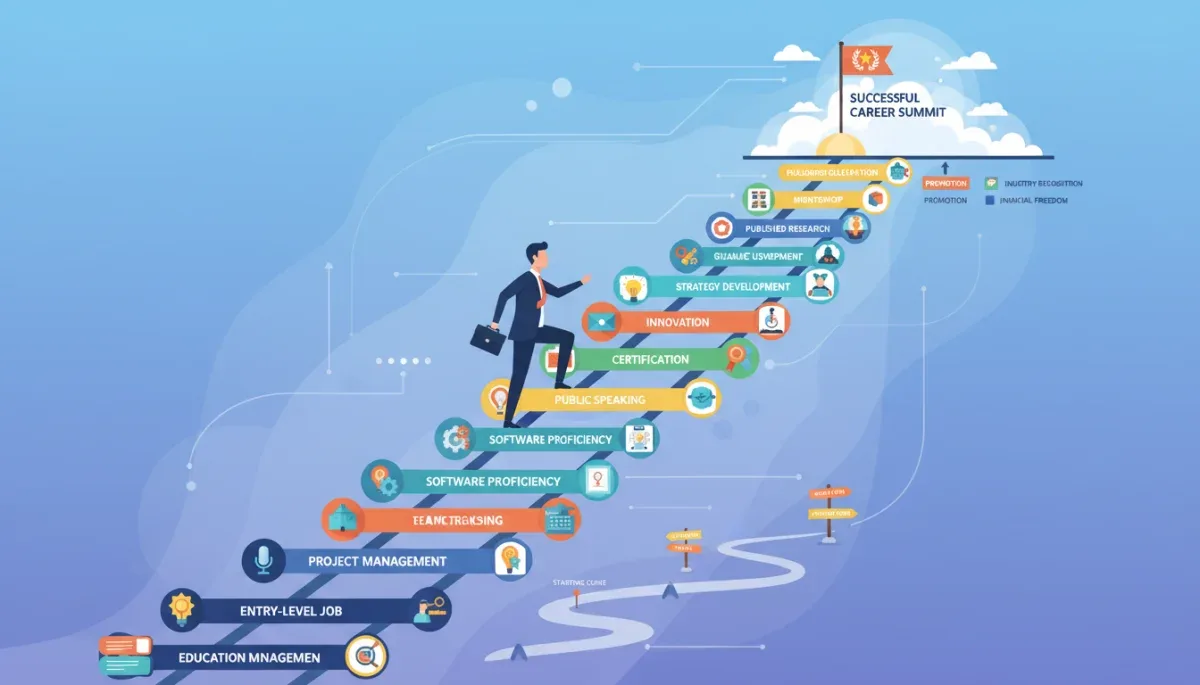
Leveraging online courses and certifications
The digital age offers an unprecedented array of resources for skill acquisition. Online platforms provide flexible and often affordable ways to learn new skills or deepen existing knowledge. Certifications, in particular, offer tangible proof of your expertise, which can be highly valued by employers.
- Explore platforms like Coursera, edX, LinkedIn Learning, and Udemy for relevant courses.
- Prioritize certifications that are recognized and respected within your industry.
- Allocate dedicated time each week for learning, treating it as an essential part of your work.
Beyond formal courses, consider workshops, webinars, and industry conferences. These events not only provide learning opportunities but also facilitate networking, which is another crucial aspect of career development.
Practical application and project-based learning
Learning is most effective when it's applied. Theoretical knowledge, while valuable, needs to be reinforced through practical application. Seek opportunities to use your new skills in real-world scenarios, whether through personal projects, volunteer work, or taking on new responsibilities at your current job.
Project-based learning allows you to build a portfolio of work, demonstrating your capabilities to potential employers or for internal advancement. It also helps solidify your understanding and identify any remaining gaps in your knowledge.
In summary, continuous skill development is not merely about accumulating qualifications; it's about fostering a growth mindset and proactively adapting to the changing demands of the professional world. By prioritizing learning, you empower yourself to navigate career shifts and seize emerging opportunities.
Building and Nurturing Your Professional Network
Networking is often misunderstood as simply collecting business cards, but it is, in fact, about building genuine relationships that can support your career journey. A robust professional network provides access to mentorship, new opportunities, industry insights, and collaborative possibilities, all essential for a strategic career plan.
In 2026, the emphasis remains on authentic connections, both online and offline. Your network can be a critical resource for growth, guidance, and opening doors that might otherwise remain closed.
Strategies for effective networking
Effective networking involves more than just attending events; it requires intentional effort and a focus on mutual benefit. Start by identifying individuals who can offer valuable insights, mentorship, or who share similar professional interests.
Approach networking with a mindset of giving as much as you receive. Offer assistance, share relevant information, and celebrate the successes of others in your network. This reciprocal approach fosters stronger, more meaningful connections.
- Attend industry conferences, workshops, and local meetups.
- Actively participate in professional online communities and forums.
- Reach out to former colleagues, mentors, and professors for informational interviews.
Leveraging LinkedIn and other professional platforms
Digital platforms, especially LinkedIn, are powerful tools for expanding and maintaining your professional network. Optimize your profile to showcase your skills and experience, making it easier for others to find and connect with you.
Engage with content, share your own insights, and join groups relevant to your industry. Sending personalized connection requests and following up thoughtfully can turn a digital connection into a valuable professional relationship. Remember, quality over quantity is key.
Maintaining and strengthening relationships
Building a network is only half the battle; nurturing it is equally important. Regularly check in with your contacts, share updates on your career, and offer support where you can. A simple message or a coffee meeting can go a long way in keeping relationships active and valuable.
Consider creating a system to track your interactions and follow-ups. This ensures that no valuable connection falls through the cracks and that you are consistently engaging with your network in a meaningful way. Strong relationships are built on trust and consistent effort over time.
Ultimately, a well-cultivated professional network is an invaluable asset in your strategic career plan. It provides a support system, opens doors to unforeseen opportunities, and keeps you informed about the evolving landscape of your industry.
Financial Planning and Career Investments
A strategic career plan isn't just about professional growth; it also encompasses the financial aspects that support and enable your ambitions. Investing in your career, whether through education, tools, or networking, often requires careful financial planning. Understanding how to manage your finances to support these investments is crucial for long-term success.
This includes budgeting for development, understanding salary expectations, and planning for potential career transitions or periods of reduced income. Financial stability provides the freedom to make strategic career choices rather than being driven solely by immediate financial needs.
Budgeting for professional development and tools
Upskilling, certifications, and professional memberships often come with costs. Incorporating these expenses into your annual budget ensures you have the resources to pursue essential development opportunities. Think of these as investments in your future earning potential.
Consider setting aside a specific portion of your income for career-related expenses. This could cover course fees, conference tickets, professional software, or even a new laptop if required for your work. Prioritize investments that offer the highest return on investment for your strategic career plan.
- Allocate funds for online courses or certification programs.
- Budget for industry conferences and networking events.
- Consider professional coaching or mentorship as an investment.
Understanding salary expectations and negotiation
Regularly research salary benchmarks for your role and industry. Knowing your market value is essential for salary negotiations, whether you're seeking a new job or asking for a raise in your current position. This research empowers you to advocate for fair compensation.
Develop strong negotiation skills. Practice articulating your value, highlighting your accomplishments, and confidently discussing your salary expectations. This is a critical skill that directly impacts your financial well-being and long-term career growth.
Planning for career transitions and financial resilience
Career paths are rarely linear. Your strategic career plan should include provisions for potential transitions, whether it's moving to a new company, changing industries, or even starting your own venture. Building financial resilience, such as an emergency fund, provides a safety net during these periods.
Having a financial buffer can reduce the pressure to take the first available job and allows you to hold out for opportunities that truly align with your long-term goals. This financial foresight is a cornerstone of a truly strategic approach to your career.
In essence, integrating financial planning into your career roadmap ensures that you have the resources and stability to pursue your professional ambitions confidently. It's about empowering your career choices through sound financial management.
Maintaining Well-being and Work-Life Balance
A strategic career plan that overlooks personal well-being is ultimately unsustainable. Professional success is intricately linked to physical, mental, and emotional health. Prioritizing work-life balance is not a luxury but a necessity for sustained productivity, creativity, and overall job satisfaction.
In 2026, the emphasis on holistic well-being continues to grow, recognizing that a healthy individual is a more effective and engaged professional. Integrating self-care into your daily and weekly routines is as important as any professional development goal.
Strategies for managing stress and preventing burnout
The demands of modern work can be intense. Developing effective stress management techniques is vital for preventing burnout, which can derail even the most carefully constructed career plan. This includes recognizing the early signs of stress and taking proactive steps to mitigate its effects.
Techniques such as mindfulness, regular exercise, adequate sleep, and setting clear boundaries between work and personal life are crucial. Don't hesitate to seek professional help if stress becomes overwhelming.
- Schedule regular breaks throughout your workday.
- Engage in hobbies and activities outside of work that bring you joy.
- Practice mindfulness or meditation to reduce daily stress.
Prioritizing physical and mental health
Your physical health directly impacts your energy levels, focus, and resilience. Ensure you are getting enough sleep, maintaining a balanced diet, and engaging in regular physical activity. These foundational elements support your mental sharpness and ability to tackle professional challenges.
Mental health is equally important. Foster positive relationships, seek out activities that stimulate your mind, and don't be afraid to take mental health days when needed. A healthy mind is a productive mind, and recognizing its needs is a sign of strength, not weakness.
Setting boundaries and disconnecting from work
The always-on culture can blur the lines between professional and personal life. Establishing clear boundaries, such as specific work hours or a dedicated workspace, helps create separation. Learning to truly disconnect from work during off-hours is essential for recharging and preventing mental fatigue.
This might involve turning off work notifications, avoiding checking emails after a certain time, or dedicating weekends entirely to personal pursuits. Protecting your personal time ensures you return to work refreshed and ready to contribute effectively to your strategic career plan.
In conclusion, a truly strategic career plan for 2026 integrates well-being as a core component. By prioritizing physical and mental health, managing stress, and maintaining a healthy work-life balance, you build a sustainable foundation for long-term professional success and personal fulfillment.
Reviewing and Adapting Your 12-Month Roadmap
A strategic career plan is not a static document; it's a living roadmap that requires periodic review and adaptation. The professional landscape, your personal circumstances, and your aspirations can all change over time, necessitating adjustments to your plan. Regular check-ins ensure your roadmap remains relevant and effective.
This iterative process allows you to celebrate successes, learn from setbacks, and fine-tune your approach, ensuring that your 12-month journey through 2026 stays aligned with your evolving goals and the dynamic world around you.
Establishing quarterly review points
Breaking your 12-month roadmap into quarterly segments creates natural review points. At the end of each quarter, take dedicated time to assess your progress against your SMART goals. This isn't about judgment, but rather a realistic evaluation of what has been achieved and what needs further attention.
During these reviews, consider what worked well, what didn't, and why. Were your goals realistic? Did you allocate enough resources? Were there unexpected opportunities or challenges that arose? Use these insights to inform your plans for the next quarter.
Adapting to new opportunities and challenges
The world is unpredictable. New technologies emerge, industries shift, and personal circumstances can change. Your strategic career plan must be flexible enough to adapt to these unforeseen opportunities and challenges. Being rigid can lead to missed chances or unnecessary frustration.
If a new, compelling opportunity arises that wasn't part of your original plan, evaluate its alignment with your long-term vision. Don't be afraid to pivot if it makes strategic sense. Similarly, if a challenge significantly impacts your progress, adapt your timeline or approach rather than abandoning the goal entirely.
Celebrating milestones and learning from setbacks
Recognizing and celebrating your achievements, no matter how small, is crucial for maintaining motivation. Acknowledge the effort you've put in and the progress you've made. This positive reinforcement fuels your continued commitment to your strategic career plan.
Equally important is learning from setbacks. View challenges not as failures, but as opportunities for growth and refinement. Analyze what went wrong, identify lessons learned, and adjust your strategy accordingly. This resilient mindset is a hallmark of successful career planning.
In conclusion, the ongoing process of reviewing and adapting your 12-month roadmap is what makes it truly strategic. It ensures your plan remains dynamic, responsive, and ultimately, a powerful tool for navigating your career journey in 2026 and beyond.
| Key Aspect | Brief Description |
|---|---|
| Goal Setting | Define SMART goals for specific, measurable, achievable, relevant, and time-bound objectives. |
| Skill Development | Identify skill gaps and invest in continuous learning through courses and practical application. |
| Networking | Build and nurture professional relationships for mentorship, opportunities, and insights. |
| Well-being | Prioritize physical and mental health to sustain productivity and prevent burnout. |
Frequently Asked Questions About Career Planning
Why is a 12-month career roadmap important?▼A 12-month career roadmap provides a structured approach to professional development, breaking down long-term goals into manageable, actionable steps. It helps maintain focus, track progress, and adapt to changes, ensuring consistent movement towards your career aspirations throughout the year.
How often should I review my strategic career plan?▼It is recommended to review your strategic career plan quarterly. This allows you to assess progress, identify any deviations, and make necessary adjustments to your goals or strategies. Regular reviews ensure the plan remains relevant and responsive to both internal and external factors.
What are SMART goals in career planning?▼SMART goals are Specific, Measurable, Achievable, Relevant, and Time-bound. This framework helps you create clear, trackable, and realistic objectives. For example, instead of "learn a new skill," a SMART goal would be "complete an advanced Python certification by October 2026 to enhance data analysis capabilities."
How can networking truly benefit my career?▼Networking offers numerous benefits, including access to mentorship, new job opportunities, industry insights, and potential collaborations. It's about building genuine relationships that provide mutual support and open doors to unforeseen professional avenues, significantly accelerating your career growth.
Is work-life balance truly achievable with an ambitious career plan?▼Yes, work-life balance is not only achievable but essential for a sustainable ambitious career plan. Prioritizing well-being, setting clear boundaries, and managing stress actively prevent burnout. A healthy work-life balance ensures sustained productivity, creativity, and long-term career satisfaction, making your ambitions more attainable.
Conclusion
Building a strategic career plan for 2026 is an empowering journey that transforms abstract aspirations into concrete achievements. By diligently following this 12-month roadmap, you're not just reacting to opportunities but actively creating them. From understanding your core motivations and setting SMART goals to continuously developing your skills, nurturing your network, managing your finances, and prioritizing your well-being, each step is designed to propel you forward. Remember that flexibility and periodic review are key to navigating the dynamic professional landscape. Embrace this proactive approach, and 2026 will undoubtedly be a year of significant growth and fulfillment in your career.