Salesforce Administrator Certification: 4-Month Guide
Advertisements

Achieving Salesforce Administrator Certification in four months is entirely feasible with a structured approach, dedicated study, and hands-on practice, opening doors to a rewarding career in the Salesforce ecosystem.
Embarking on a new career path can seem daunting, but with a clear roadmap, success is within reach. This guide provides a detailed plan for aspiring professionals to go from zero to certified with the Salesforce Administrator Certification in just four months, transforming your career prospects and opening doors in a high-demand field.
Understanding the Salesforce Administrator Role and Certification
The Salesforce Administrator plays a crucial role in any organization utilizing the Salesforce platform. They are the backbone, ensuring the system runs smoothly, is optimized for business needs, and provides maximum value to users. This section delves into the core responsibilities and the significance of obtaining the Salesforce Administrator Certification.
Becoming a certified Salesforce Administrator demonstrates a foundational understanding of Salesforce applications, configuration, and management. It signifies that an individual possesses the skills to maintain a Salesforce instance, respond to user needs, and implement basic customizations. This certification is often a prerequisite for many entry-level Salesforce positions and serves as a springboard for advanced certifications.
Key Responsibilities of a Salesforce Administrator
A Salesforce Administrator wears many hats, from managing user access to customizing the platform. Their daily tasks are diverse and critical to an organization’s operational efficiency.
- User Management: Creating and managing users, profiles, and permission sets.
- Data Management: Importing, exporting, and ensuring data quality within Salesforce.
- Security Settings: Configuring organization-wide defaults, sharing rules, and field-level security.
- Automation Tools: Building basic workflows, process builders, and approval processes to streamline business operations.
Understanding these responsibilities is the first step in appreciating the value of the certification. It’s not just about passing an exam; it’s about mastering the skills that businesses desperately need. The certification validates these skills, making candidates highly attractive to employers.
In conclusion, the Salesforce Administrator role is fundamental to the successful adoption and utilization of the Salesforce platform. The certification acts as a formal acknowledgment of expertise, significantly boosting career opportunities and earning potential in the ever-expanding Salesforce ecosystem.
Month 1: Laying the Foundation – Salesforce Basics and Navigation
The first month of your four-month journey to Salesforce Administrator Certification is dedicated to building a strong foundational understanding of the Salesforce platform. This period focuses on familiarizing yourself with the interface, core concepts, and basic administrative tasks. It’s crucial to immerse yourself in the Salesforce environment to develop intuitive navigation skills.
During this month, you will explore the Salesforce user interface, understand its various components, and begin to grasp the fundamental architecture. The goal is not just memorization but conceptual understanding, which will serve as the bedrock for more complex topics in the subsequent months.
Getting Started with Trailhead and Salesforce Org
Trailhead, Salesforce’s free online learning platform, will be your primary resource. It offers modules, projects, and trails designed to teach you everything about Salesforce in an interactive way. Simultaneously, setting up a free Developer Edition org is essential for hands-on practice.
- Trailhead Modules: Complete modules on ‘Salesforce Platform Basics,’ ‘Admin Beginner,’ and ‘Data Modeling.’
- Developer Org Setup: Create your free Salesforce Developer Edition org to experiment and practice configurations without affecting live data.
- Interface Exploration: Spend time navigating through the Sales Cloud and Service Cloud applications, identifying key objects like Accounts, Contacts, Leads, and Opportunities.
Hands-on experience cannot be overstressed. Merely reading or watching videos is insufficient; you must actively engage with the platform. This hands-on approach helps solidify theoretical knowledge and builds confidence in your abilities.
By the end of Month 1, you should feel comfortable navigating Salesforce, understanding its basic data model, and performing simple tasks like creating records and customizing page layouts. This foundational knowledge is critical for tackling more advanced administrative topics.
Month 2: Deep Dive into User Management and Security
Building upon the foundational knowledge from Month 1, the second month of your Salesforce Administrator Certification preparation focuses on two critical areas: user management and data security. These topics are central to the administrator’s role, as they ensure that the right people have the right access to the right information within Salesforce.
This month requires a detailed understanding of how Salesforce controls access to data and functionality. You’ll learn about profiles, permission sets, roles, and sharing settings, which are often challenging but essential concepts for any aspiring administrator.
Managing Users and Controlling Access
Salesforce offers a robust security model to protect sensitive data. Understanding how to implement this model effectively is paramount for any administrator. This involves configuring various settings to ensure data integrity and compliance.
- Profiles and Permission Sets: Learn to create and manage profiles to define user permissions and access, and use permission sets to grant additional permissions without changing profiles.
- Roles and Sharing Settings: Understand the role hierarchy and how it impacts data visibility. Explore organization-wide defaults, sharing rules, and manual sharing to control record access.
- Field-Level Security: Configure which fields users can view and edit based on their profile or permission set.
Practical application is key here. Spend considerable time in your Developer Org creating different users, assigning them various profiles and permission sets, and testing their access to different records and fields. This hands-on practice will illuminate how these security features interact.
By the end of Month 2, you should be proficient in managing users, understanding the nuances of Salesforce’s security model, and confidently configuring access controls. This expertise is vital for maintaining a secure and efficient Salesforce environment.
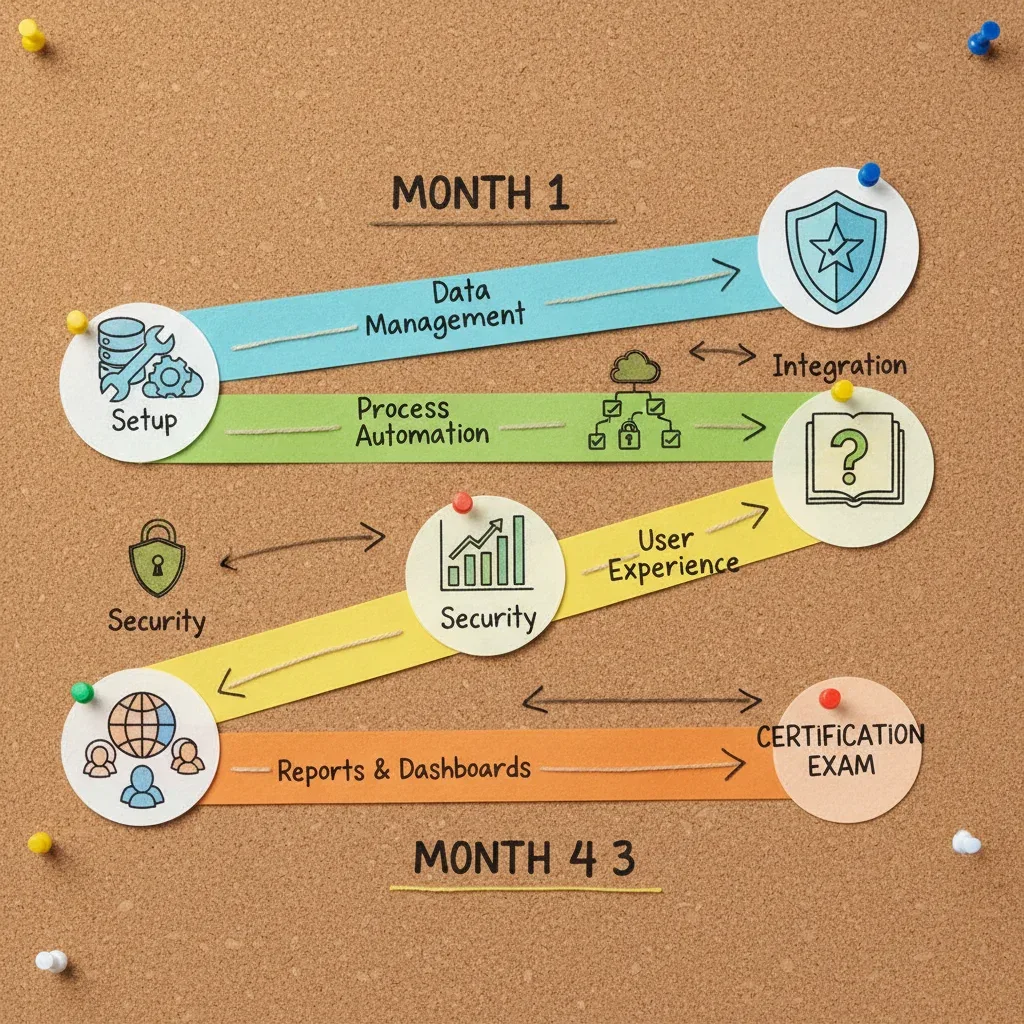
Month 3: Data Management, Automation, and Reporting
The third month of your journey towards Salesforce Administrator Certification shifts focus to managing data effectively, automating business processes, and extracting valuable insights through reporting. These skills are crucial for optimizing Salesforce’s utility and driving business efficiency.
This phase involves understanding how to maintain data quality, automate repetitive tasks, and create meaningful reports and dashboards that help stakeholders make informed decisions. It combines technical configuration with a strategic understanding of business needs.
Mastering Data Tools and Process Automation
Data is the lifeblood of any CRM, and its proper management is paramount. Salesforce provides several tools to ensure data quality and integrity. Concurrently, automation helps streamline operations, saving time and reducing manual errors.
- Data Import/Export: Learn to use the Data Import Wizard and Data Loader for mass importing and exporting records. Understand when to use each tool.
- Data Quality: Explore tools and strategies for preventing duplicate records, validating data, and maintaining overall data health.
- Workflow Rules and Process Builder: Dive into Salesforce automation tools. Understand how to create workflow rules and process builder flows to automate tasks, email alerts, field updates, and more.
Actively practice these concepts in your Developer Org. Try importing a large dataset, then identify and merge duplicates. Create a process builder flow that automates a simple business process, such as updating a field when a record meets certain criteria. This hands-on work will reinforce your learning and prepare you for real-world scenarios.
By the end of Month 3, you should be adept at managing Salesforce data, capable of implementing basic automation, and able to create insightful reports and dashboards. These competencies are vital for maximizing the value of Salesforce within an organization.
Month 4: Exam Preparation, Review, and Practice Tests
The final month of your intensive program for Salesforce Administrator Certification is entirely dedicated to comprehensive review, consolidation of knowledge, and rigorous practice for the exam. This period is about refining your understanding, identifying knowledge gaps, and building confidence for test day.
This month moves beyond learning new material to mastering previously covered topics and understanding the exam format. It’s a strategic push to ensure you are fully prepared to pass the certification exam on your first attempt.
Simulating the Exam Environment and Final Review
Effective exam preparation involves more than just re-reading notes. It requires active recall, timed practice tests, and a deep understanding of the exam objectives. Focus on areas where you feel less confident.
- Official Exam Guide Review: Go through the official Salesforce Administrator Exam Guide point-by-point, ensuring you understand every topic listed.
- Practice Tests: Utilize online practice exams (both free and paid) to simulate the real exam environment. Pay attention to the types of questions asked and the time constraints.
- Flashcards and Study Groups: Create flashcards for key terms, concepts, and limits. Consider joining a study group to discuss challenging topics and gain different perspectives.
Don’t just take practice tests; analyze your results. Understand why you got certain questions wrong and revisit those specific topics. This targeted approach is far more effective than generic review. Focus on the core concepts and how they apply in various scenarios.
By the end of Month 4, you should feel confident in your ability to tackle the Salesforce Administrator Certification exam. This month is about solidifying your knowledge and developing a strategic approach to answering exam questions effectively.
Beyond Certification: Continuous Learning and Career Growth
Achieving your Salesforce Administrator Certification in four months is a significant milestone, but it’s just the beginning of a dynamic career journey. The Salesforce ecosystem is constantly evolving, making continuous learning not just beneficial, but essential for sustained success and career advancement.
The certification validates your foundational skills, but the real growth comes from applying that knowledge, tackling new challenges, and staying current with platform updates. This section explores pathways for continued professional development and leveraging your certification for career growth.
Expanding Your Salesforce Expertise
Salesforce offers a multitude of certifications beyond the Administrator level, each opening doors to specialized roles and increased earning potential. Consider which path aligns best with your career aspirations.
- Advanced Administrator: Deepen your administrative skills with more complex scenarios and advanced features.
- Platform App Builder: Learn to build custom applications on the Salesforce platform using declarative tools.
- Consultant Certifications: Specialize in Sales Cloud, Service Cloud, or Experience Cloud to work as a consultant helping businesses implement Salesforce solutions.
Beyond certifications, actively participate in the Salesforce community. Engage in Trailblazer Community groups, attend local user group meetings, and follow Salesforce blogs and news. Networking with other Salesforce professionals can provide invaluable insights, mentorship opportunities, and potential job leads.
Remember, the Salesforce platform is updated three times a year. Staying informed about these releases is crucial. Utilize Trailhead, release notes, and webinars to understand new features and functionalities. This commitment to continuous learning will ensure you remain a valuable asset in the Salesforce ecosystem.
In conclusion, while the Salesforce Administrator Certification is a powerful credential, viewing it as a launching pad rather than a final destination is key. Embrace continuous learning, explore advanced certifications, and actively engage with the Salesforce community to unlock a fulfilling and prosperous career.
Maximizing Your Learning: Tips and Best Practices
To successfully navigate the intensive four-month path to Salesforce Administrator Certification, adopting effective learning strategies and best practices is paramount. Merely going through the motions won’t guarantee success; deliberate and efficient study habits are crucial for retaining information and applying it practically.
This section provides actionable tips and proven techniques to optimize your learning experience, ensuring you make the most of every study session and build a robust understanding of the Salesforce platform.
Effective Study Techniques and Resource Utilization
Your approach to learning can significantly impact your progress and comprehension. Integrating a variety of study methods will help reinforce concepts and keep your motivation high.
- Consistent Daily Practice: Dedicate at least 1-2 hours daily to Trailhead modules and hands-on practice in your Developer Org. Consistency is more important than sporadic long sessions.
- Note-Taking and Summarization: Actively take notes, summarizing key concepts in your own words. This process aids memory retention and helps identify areas you don’t fully grasp.
- Utilize Diverse Resources: Don’t limit yourself to just Trailhead. Explore YouTube tutorials, Salesforce blogs, and community forums. Different explanations can clarify complex topics.
- Teach What You Learn: Explaining a concept to someone else (even an imaginary person or a pet) is a powerful way to solidify your understanding and expose any gaps in your knowledge.
Beyond active learning, managing your time effectively and staying organized are equally important. Create a detailed study schedule and stick to it. Break down large topics into smaller, manageable chunks. Regular breaks are also essential to prevent burnout and maintain focus.
Finally, don’t be afraid to ask for help. The Salesforce community is incredibly supportive. If you encounter a challenging concept, post your question in community forums or seek clarification from study partners. Leveraging collective knowledge can significantly accelerate your learning process.
By implementing these best practices, you’ll not only prepare more effectively for the certification exam but also build a deeper, more practical understanding of Salesforce administration that will serve you well throughout your career.
| Key Milestone | Brief Description |
|---|---|
| Month 1: Foundation | Learn Salesforce basics, navigation, and core concepts using Trailhead and a Developer Org. |
| Month 2: User & Security | Deep dive into user management, profiles, permission sets, roles, and data security models. |
| Month 3: Data & Automation | Master data management tools, process automation (Workflow/Process Builder), and reporting. |
| Month 4: Exam Prep | Intensive review, practice tests, and identifying knowledge gaps for final exam readiness. |
Frequently Asked Questions About Salesforce Admin Certification
Is it realistic to get Salesforce Administrator certified in 4 months?▼Yes, it’s very realistic with a structured study plan and dedicated effort. Many individuals achieve this certification within this timeframe by committing consistent hours daily to Trailhead and hands-on practice in a Developer Org.
What are the prerequisites for the Salesforce Administrator Certification?▼There are no formal prerequisites. However, Salesforce recommends 6 months of experience as an administrator. Our 4-month plan aims to simulate this experience through intensive hands-on practice and guided learning.
What resources are best for studying for the Salesforce Admin exam?▼Trailhead is the primary and most recommended resource. Supplement it with a free Developer Edition org for practice, official Salesforce documentation, study guides, and reputable online practice exams to solidify your knowledge.
How much does the Salesforce Administrator Certification exam cost?▼The registration fee for the Salesforce Certified Administrator exam is typically $200 USD. A retake fee, if necessary, is $100 USD. These fees are standard and subject to change by Salesforce.
What career opportunities open up after getting certified?▼Certification opens doors to roles like Salesforce Administrator, Junior Salesforce Consultant, Business Analyst, or CRM Manager. It significantly enhances your resume and employment prospects in the growing Salesforce ecosystem across various industries.
Conclusion
Achieving your Salesforce Administrator Certification in four months is an ambitious yet entirely attainable goal that can significantly accelerate your career trajectory. By diligently following a structured plan, committing to consistent daily study, and engaging in extensive hands-on practice, you can master the necessary skills and pass the exam with confidence. This certification is more than just a credential; it’s a gateway to a rewarding career in a highly sought-after field, positioning you for continuous growth and diverse opportunities within the dynamic Salesforce ecosystem. Embrace the challenge, leverage the abundant resources available, and prepare to transform your professional future.