Mastering Microsoft Certifications: New Paths to Expertise for 2026
Advertisements

Microsoft Certifications are undergoing significant updates for 2026, introducing new specialized pathways crucial for IT professionals to validate expertise and enhance career prospects in a rapidly evolving technological landscape.
Are you an IT professional looking to stay ahead in the ever-evolving tech world? Understanding the latest trends in Microsoft Certifications 2026 is not just beneficial; it’s essential for career advancement and proving your expertise in critical areas like cloud computing, AI, and cybersecurity.
The evolving landscape of Microsoft Certifications
The tech industry is in a constant state of flux, driven by rapid advancements in artificial intelligence, cloud computing, and data science. Microsoft, a pivotal player in this ecosystem, continually updates its certification programs to reflect these changes. For 2026, we are seeing a clear emphasis on specialized roles and a more integrated approach to skill validation. This shift ensures that certified professionals possess the most current and relevant skills demanded by employers.
Gone are the days when a single certification could cover a broad range of technologies for an extended period. Today, the focus is on depth within specific domains. This evolution means that individuals must be more strategic in their certification choices, aligning them closely with their career goals and the technological needs of their industries. Microsoft’s updated framework is designed to provide clearer pathways, making it easier for professionals to navigate their learning journey.
Why certifications matter more than ever
In a competitive job market, certifications serve as a powerful differentiator. They provide tangible proof of a professional’s capabilities and commitment to continuous learning. Employers increasingly rely on these credentials to identify qualified candidates who can hit the ground running with specialized knowledge.
- Validation of skills: Certifications offer third-party validation of technical proficiency.
- Career advancement: They often open doors to promotions and higher-paying roles.
- Industry recognition: Microsoft certifications are globally recognized and respected.
- Staying current: The updated exams ensure professionals are knowledgeable about the latest tech.
The continuous evolution of Microsoft’s certification portfolio underscores the dynamic nature of IT. Professionals who embrace this change and pursue relevant certifications will undoubtedly position themselves for long-term success. Understanding the new paths available is the first step toward mastering these crucial credentials.
Key changes and new certification pathways for 2026
Microsoft has refined its certification structure for 2026, moving towards a more role-based and solution-focused model. This approach is designed to ensure that certified professionals have the precise skills needed for specific job functions, rather than a generalized understanding. The changes reflect the growing demand for expertise in areas such as Azure services, Microsoft 365 administration, and Dynamics 365 implementations.
New pathways are emerging, particularly in specialized areas that were previously covered by broader exams. This specialization allows for a deeper dive into critical technologies, providing a more robust skill set. For instance, expect to see more granular certifications in areas like Azure AI engineering, data governance, and advanced security operations.
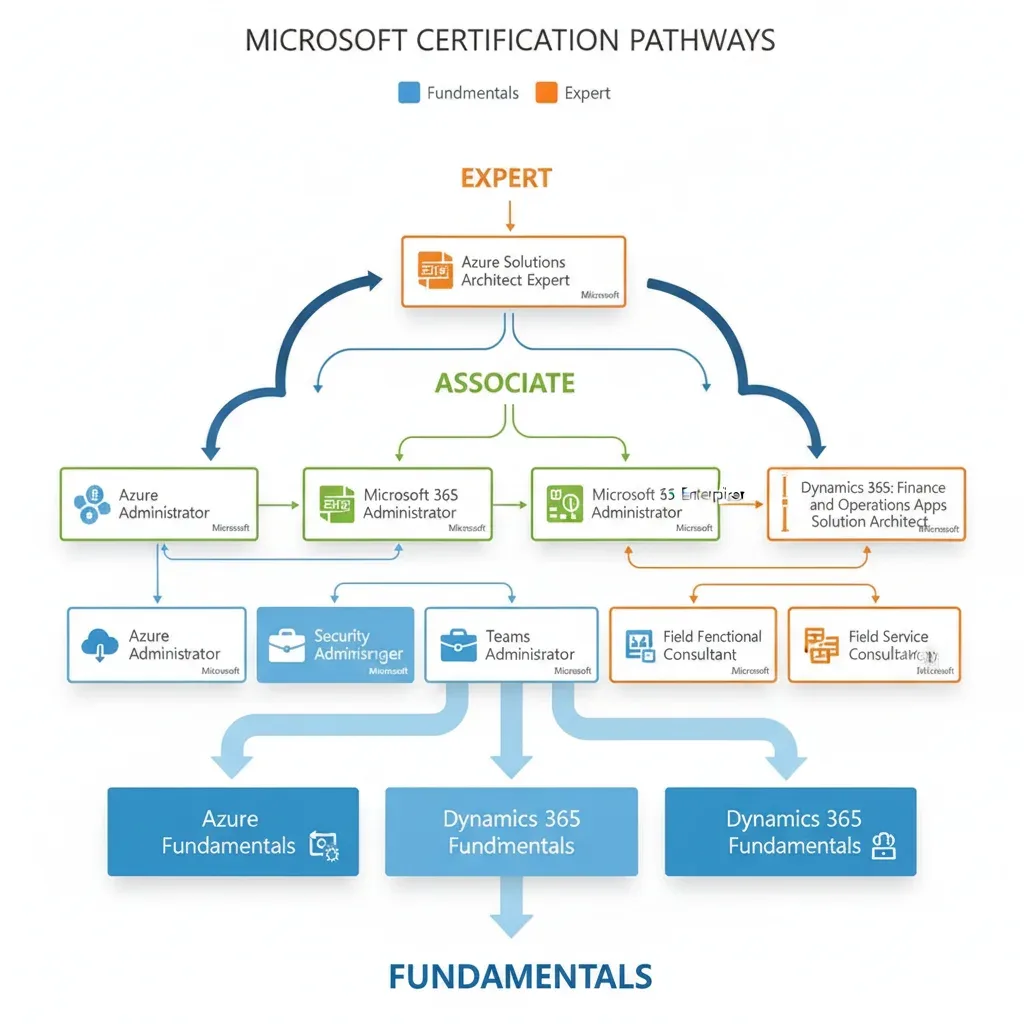
These new pathways are often built upon foundational knowledge, encouraging a progressive learning journey. Individuals typically start with a ‘Fundamentals’ certification, then advance to ‘Associate’ and finally ‘Expert’ levels. This structured progression helps learners build a solid knowledge base before tackling more complex topics.
Emphasis on cloud and AI technologies
Cloud computing, particularly Microsoft Azure, continues to be a central focus. New certifications are being introduced to address the nuances of cloud architecture, migration strategies, and cost optimization. Similarly, artificial intelligence and machine learning are receiving significant attention, with certifications tailored for AI engineers, data scientists, and AI solution architects.
- Azure Solutions: Expanded certifications for specialized roles in Azure infrastructure, development, and data.
- Microsoft 365: Updated exams for administrators and security professionals managing modern workplaces.
- Dynamics 365: New pathways for functional consultants and developers implementing business applications.
- Security, Compliance, and Identity: Enhanced focus on protecting digital assets and ensuring regulatory adherence.
These changes underscore Microsoft’s commitment to providing relevant and industry-leading certifications. Professionals should carefully review the updated certification guide on Microsoft’s official website to identify the pathways most aligned with their career aspirations and current skill set. The new structure offers clearer guidance on how to achieve expertise in high-demand areas.
Strategic planning for your certification journey
Embarking on a Microsoft certification journey requires careful planning to maximize your time and effort. With the evolving landscape for 2026, a strategic approach is more crucial than ever. Begin by assessing your current skills and identifying your career goals. What technologies excite you? Which roles are you aiming for? Answering these questions will help narrow down the vast array of available certifications.
Once you have a clear objective, research the specific certification pathways that align with your goals. Microsoft’s website provides detailed information on each certification, including required exams, recommended training resources, and skill measured. Pay close attention to any prerequisites, as some advanced certifications require prior experience or other foundational certifications.
Choosing the right certifications
Selecting the appropriate certifications involves more than just picking what sounds interesting. Consider market demand, your existing experience, and the long-term relevance of the technology. For instance, if you’re aiming for a cloud architect role, a series of Azure certifications would be more beneficial than a standalone Microsoft 365 certification.
- Align with career goals: Choose certifications that directly support your desired job role.
- Assess market demand: Prioritize certifications for technologies with high industry demand.
- Consider prerequisites: Understand the foundational knowledge required for advanced exams.
- Plan a learning path: Develop a structured plan for studying and taking exams.
Effective planning also involves setting realistic timelines for studying and taking exams. Leverage official Microsoft learning paths, online courses, and practice tests to prepare thoroughly. Remember, the goal is not just to pass the exam but to truly master the underlying concepts and apply them in real-world scenarios. A well-thought-out plan ensures a smoother and more successful certification journey.
Resources and training for optimal preparation
Preparing for Microsoft Certifications in 2026 requires access to high-quality and up-to-date resources. Microsoft itself offers a wealth of official learning materials designed to help candidates succeed. These resources are often the most accurate and comprehensive, directly aligning with the exam objectives. Leveraging them effectively can significantly enhance your chances of passing.
Beyond official documentation, a variety of other training options are available to suit different learning styles and schedules. These include online courses, virtual labs, instructor-led training, and practice exams. Combining several types of resources can provide a holistic preparation experience, reinforcing concepts through different mediums.
Official Microsoft learning paths
Microsoft Learn is an invaluable platform offering free, self-paced learning paths for almost every certification. These paths consist of modules, exercises, and knowledge checks, guiding you through the necessary concepts and skills. It’s an excellent starting point for anyone preparing for an exam.
- Microsoft Learn: Free, self-paced modules and hands-on labs.
- Official Documentation: Detailed technical guides and reference materials.
- Virtual Training Days: Free, instructor-led online events covering key topics.
- Practice Tests: Simulate exam conditions and identify areas for improvement.
For those who prefer structured learning, Microsoft Certified Trainers (MCTs) offer instructor-led courses, either in-person or virtually. These courses provide in-depth instruction, opportunities for questions, and often include hands-on labs that mimic real-world scenarios. Investing in quality training resources is an investment in your career, ensuring you are thoroughly prepared for the challenges of the certification exams and beyond.
The impact of certifications on career growth
Obtaining Microsoft Certifications has a profound impact on career growth, especially in the rapidly evolving tech landscape of 2026. These credentials are more than just badges; they are a testament to your commitment to professional development and mastery of cutting-edge technologies. Employers highly value certified professionals because they bring validated expertise and a proven ability to solve complex technical challenges.
Certifications can significantly enhance your marketability, making you a more attractive candidate for new opportunities and promotions. They often lead to higher earning potential, as companies are willing to invest in individuals who can demonstrate specialized skills that directly contribute to business objectives. The return on investment for pursuing certifications is often substantial, both in terms of salary and career satisfaction.
Enhanced job prospects and earning potential
In a competitive job market, certifications act as a key differentiator. They signal to recruiters and hiring managers that you possess the specific knowledge and skills required for a role, often reducing the need for extensive on-the-job training. This can lead to quicker hiring processes and more favorable employment terms.
- Increased demand: Certified professionals are often prioritized by employers seeking specific skills.
- Higher salaries: Studies consistently show that certified IT professionals earn more than their non-certified counterparts.
- Career mobility: Certifications can facilitate transitions into new roles or specialized areas.
- Professional credibility: They build trust and confidence in your technical abilities.
Beyond the immediate benefits, certifications foster a mindset of continuous learning, which is crucial for long-term career success in technology. As technologies continue to evolve, regularly updating your certifications ensures that your skills remain relevant and valuable. This proactive approach to professional development is a hallmark of successful IT careers.
Future trends and staying updated
The technological landscape is constantly shifting, and what is cutting-edge today may be standard practice tomorrow. For IT professionals, staying updated is not merely an option but a necessity. Microsoft Certifications for 2026 are designed to address current and emerging trends, but the pace of innovation means continuous learning is paramount. Anticipating future trends allows you to strategically plan your next certification moves and maintain a competitive edge.
Looking ahead, we can expect continued growth in areas such as quantum computing, advanced cybersecurity threats, and the integration of AI across all business functions. Microsoft’s certification roadmap will likely reflect these developments, introducing new specializations and updating existing ones to cover the latest advancements. Staying engaged with industry news, tech communities, and official Microsoft announcements is vital.
Embracing lifelong learning
The concept of lifelong learning is more relevant than ever in the tech industry. Certifications provide structured pathways for this learning, but they are just one component. Active participation in tech communities, attending webinars, reading industry publications, and engaging in personal projects all contribute to a comprehensive learning strategy.
- Monitor Microsoft’s roadmap: Keep an eye on official announcements for new certifications and exam updates.
- Engage with tech communities: Participate in forums, user groups, and social media discussions to learn from peers.
- Experiment with new tech: Hands-on experience with emerging technologies is invaluable.
- Seek continuous feedback: Regularly assess your skills and identify areas for further development.
By proactively seeking out new knowledge and adapting to changes, IT professionals can ensure their expertise remains valuable and sought after. Microsoft Certifications serve as excellent milestones in this ongoing journey, validating skills at critical junctures and guiding professionals toward future growth opportunities. The key is to view certification as part of a broader commitment to continuous professional evolution.
| Key Aspect | Description for 2026 |
|---|---|
| Evolving Focus | Shift towards specialized, role-based certifications in cloud, AI, and security. |
| New Pathways | Introduction of granular certifications for Azure, Microsoft 365, and Dynamics 365 roles. |
| Preparation Resources | Utilize Microsoft Learn, official docs, and practice tests for effective study. |
| Career Impact | Enhances job prospects, earning potential, and professional credibility in tech. |
Frequently asked questions about Microsoft Certifications 2026
What are the biggest changes to Microsoft Certifications for 2026?▼The most significant changes for 2026 involve a greater emphasis on role-based and specialized certifications, particularly in cloud computing (Azure), artificial intelligence, and cybersecurity. There’s a move away from broader exams to more focused pathways that align directly with specific job functions and industry demands.
How do I choose the right Microsoft Certification for my career?▼To choose the right certification, first assess your current skills and define your career goals. Research Microsoft’s official certification pathways on their website, aligning them with your desired job role and market demand. Consider foundational certifications before advancing to associate or expert levels.
Are older Microsoft Certifications still valid in 2026?▼Many older Microsoft certifications have expiration dates or are being retired as new ones emerge. It’s crucial to check the official Microsoft Learning website for current validity and retirement policies for specific certifications. Professionals are encouraged to pursue newer, updated certifications to maintain relevance.
What resources are available to prepare for new Microsoft Certification exams?▼Microsoft offers extensive resources including Microsoft Learn (free, self-paced modules), official documentation, virtual training days, and practice tests. Additionally, instructor-led training from Microsoft Certified Trainers and third-party online courses can provide comprehensive preparation for certification exams.
How can Microsoft Certifications boost my earning potential?▼Microsoft Certifications validate specialized skills highly sought after by employers, leading to increased marketability and often higher salaries. They demonstrate expertise and commitment to professional growth, which can result in better job offers, promotions, and overall enhanced earning potential within the IT industry.
Conclusion
The landscape of Microsoft Certifications for 2026 represents a clear evolution towards deeper specialization and alignment with critical industry demands. For IT professionals in the United States, embracing these new paths is not merely about accumulating credentials but about strategically positioning themselves for sustained career growth and relevance. By understanding the updated framework, leveraging official resources, and committing to continuous learning, individuals can effectively master these certifications and unlock new opportunities in cloud, AI, and cybersecurity. Staying informed and proactive will be the hallmark of successful tech careers in the years to come.