2026 Guide to Learning a Second Language for Career Advancement
Advertisements

Learning a second language is a strategic move for career advancement in 2026, with Mandarin, Spanish, and German emerging as top choices offering distinct professional advantages across various industries.
In an increasingly interconnected global economy, the ability to communicate across linguistic barriers has become an invaluable asset. This 2026 Guide to Learning a Second Language for Career Advancement: 3 Top Choices (Comparison/Analysis) delves into why mastering another tongue is no longer just a hobby, but a critical skill for professional growth. We’ll explore the strategic advantages of three prominent languages – Mandarin, Spanish, and German – to help you make an informed decision that aligns with your career aspirations.
The evolving landscape of global careers in 2026
The year 2026 presents a dynamic job market, characterized by globalization, technological integration, and a growing demand for cross-cultural competence. Companies are increasingly operating on an international scale, requiring employees who can navigate diverse markets and communicate effectively with global partners and clients. This shift elevates the importance of multilingualism.
Beyond direct communication, learning a new language cultivates a unique set of cognitive skills highly valued by employers. It enhances problem-solving abilities, improves multitasking, and fosters a deeper understanding of different cultures, which is crucial for international business relations. These ‘soft skills’ are often as important as technical expertise in today’s competitive environment.
The undeniable business advantage
- Market Expansion: Access to new markets and customer bases, especially in emerging economies.
- Negotiation Skills: Improved ability to negotiate and build rapport with international counterparts.
- Cultural Intelligence: A deeper understanding of global business etiquette and cultural nuances.
Furthermore, proficiency in a second language often leads to higher earning potential and broader job opportunities. Many roles, particularly in international business, diplomacy, and technology, specifically seek out bilingual or multilingual candidates, recognizing the tangible value they bring to an organization.
Mandarin: the language of global commerce and innovation
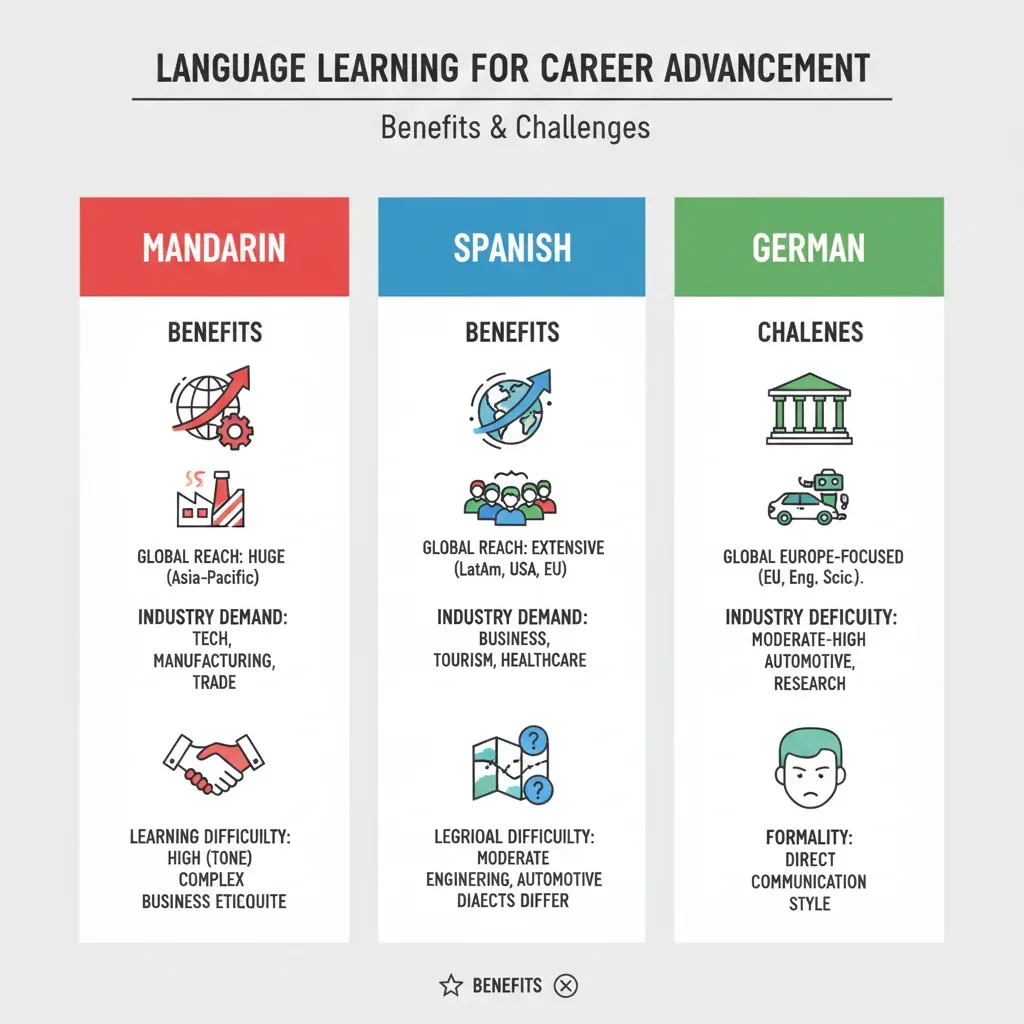
Mandarin Chinese stands as a powerhouse in the global economy, reflecting China’s immense influence in trade, technology, and manufacturing. For professionals eyeing careers in international business, finance, or tech, Mandarin offers unparalleled access to one of the world’s largest and fastest-growing markets. Its importance is only projected to increase in the coming years.
Learning Mandarin goes beyond business; it opens doors to understanding a rich and ancient culture, which can be a significant advantage in building strong, lasting professional relationships. While often perceived as challenging due to its tonal nature and complex writing system, the rewards for mastering Mandarin are substantial, translating into unique career pathways and leadership opportunities.
Key career sectors for Mandarin speakers
- Technology and AI: China’s rapid advancements in AI, e-commerce, and software development.
- Manufacturing and Supply Chain: Dominance in global production and intricate supply networks.
- International Trade and Finance: China’s role as a major global trading partner and financial hub.
The demand for Mandarin speakers in the United States, particularly within companies engaging with Chinese markets, is consistently high. These roles often involve direct communication, translation, cultural mediation, and strategic market entry, making Mandarin an excellent investment for long-term career growth.
Spanish: connecting continents and diverse industries
Spanish holds a unique position as a global language, spoken by nearly 600 million people worldwide, making it the second most spoken native language after Mandarin. Its prevalence across Latin America, Spain, and increasingly within the United States, makes it an incredibly versatile asset for career advancement. For many industries, Spanish is not just an advantage but a necessity.
From healthcare and education to international relations and tourism, Spanish proficiency unlocks opportunities across a vast array of sectors. In the U.S., the growing Hispanic population makes Spanish an indispensable tool for engaging with communities, expanding customer bases, and fostering inclusivity in the workplace. Its phonetic nature also makes it relatively accessible for English speakers to learn, offering a quicker path to proficiency.
Industries where Spanish shines
- Healthcare: Essential for communicating with patients and their families in diverse communities.
- Education: Growing demand for bilingual teachers and support staff in U.S. schools.
- Tourism and Hospitality: Facilitating seamless experiences for travelers in Spanish-speaking regions.
- International Relations and Diplomacy: Critical for engagement with Latin American countries.
Furthermore, Spanish is a gateway to rich cultures and vibrant economies, offering professionals not just linguistic skills but also a broader worldview. Its widespread use ensures that opportunities for practice and immersion are abundant, accelerating the learning process and solidifying its practical application in daily professional life.
German: precision, engineering, and European influence
German, while not as globally widespread as Mandarin or Spanish, is a paramount language within Europe’s economic powerhouse. Germany boasts the largest economy in Europe and is a global leader in engineering, automotive, chemical, and pharmaceutical industries. For professionals aiming for roles in these high-tech and precision-driven sectors, German is an invaluable asset.
Beyond Germany, the language is also widely spoken in Austria, Switzerland, and parts of Central and Eastern Europe, extending its professional reach. German companies are renowned for their innovation and quality, and fluency in German can provide a significant competitive edge in securing positions within these prestigious organizations or with their international partners. The logical structure of the German language can also appeal to those with an analytical mindset.
Strategic advantages of learning German
- Engineering and Automotive: Access to leading companies like BMW, Mercedes-Benz, and Siemens.
- Scientific Research: Germany is a hub for scientific innovation and academic collaboration.
- Export and Manufacturing: Germany’s strong export-oriented economy offers numerous opportunities.
Proficiency in German signifies a commitment to detail and a strong work ethic, qualities highly regarded in German business culture. It not only facilitates direct communication but also demonstrates a respect for cultural norms, which can be crucial for forging strong professional alliances and advancing within German-speaking business environments.
Comparing the top 3: factors to consider for your career
When choosing between Mandarin, Spanish, and German for career advancement, several factors come into play beyond mere popularity or economic influence. Your personal career goals, existing skills, and even your learning style should guide your decision. Each language presents a unique set of challenges and rewards, tailored to different professional trajectories.
Consider the specific industries you wish to enter or advance within. If your focus is on emerging markets and technological innovation, Mandarin might be your best bet. For roles requiring broad communication across the Americas or within diverse U.S. communities, Spanish is highly advantageous. If precision engineering, research, or European business is your calling, German offers a clear path.
Decision-making criteria
- Career Path Alignment: Does the language directly support your desired industry or role?
- Learning Curve: How much time and effort are you willing to invest in achieving proficiency?
- Geographic Focus: Which regions or countries are most relevant to your professional ambitions?
- Cultural Interest: Your personal interest in the culture associated with the language can sustain motivation.
Ultimately, the ‘best’ language is the one that most effectively serves your individual career objectives and resonates with your personal interests. A deep dive into these considerations will help you select the language that yields the greatest return on your investment of time and effort, propelling your career forward in 2026 and beyond.
Strategies for effective language acquisition in 2026
Embarking on a journey to learn a second language for career advancement requires more than just enthusiasm; it demands a strategic approach to acquisition. In 2026, a wealth of resources and methodologies are available, from AI-powered apps to immersive online courses, making language learning more accessible and efficient than ever before. The key is consistency and active engagement.
Start by setting realistic goals and breaking down your learning into manageable steps. Integrate language practice into your daily routine, whether it’s through listening to podcasts during your commute, watching foreign films, or engaging in conversation exchange partners. Utilize technology to your advantage, leveraging apps that offer personalized learning paths and instant feedback.
Maximizing your language learning journey
- Consistent Practice: Daily exposure, even for short periods, is more effective than infrequent long sessions.
- Immersion Techniques: Surround yourself with the language through media, music, and native speakers.
- Goal Setting: Define clear, achievable milestones for your proficiency journey.
- Professional Tutoring: Consider one-on-one sessions for personalized guidance and accelerated learning.
Furthermore, focus on practical, career-relevant vocabulary and phrases. Tailor your learning to the specific needs of your industry, practicing scenarios and terminology that you would encounter in your professional life. Networking with native speakers in your field can also provide invaluable insights and opportunities for real-world application of your new skills.
| Key Language | Career Advantage |
|---|---|
| Mandarin | Access to China’s vast tech, trade, and manufacturing markets. |
| Spanish | Connects U.S. professionals with Hispanic markets and diverse communities. |
| German | Key for European engineering, automotive, and scientific sectors. |
| Overall Benefit | Enhanced cognitive skills, higher earning potential, and broader global opportunities. |
Frequently asked questions about language learning for career advancement
Why is learning a second language so important for careers in 2026?▼In 2026, a second language is crucial for career advancement due to increasing globalization, cross-cultural collaboration, and the demand for employees who can navigate diverse international markets. It enhances communication, cultural understanding, and opens up more job opportunities globally.
Is Mandarin difficult to learn for English speakers?▼Mandarin is often considered challenging for English speakers due to its tonal nature and unique writing system. However, with consistent practice and dedicated resources, many learners achieve proficiency. The benefits for career advancement, especially in tech and trade, often outweigh the initial learning curve.
What career advantages does Spanish offer in the United States?▼Spanish offers significant career advantages in the U.S. across sectors like healthcare, education, and customer service, due to the large and growing Hispanic population. It enables better communication with diverse communities, expands business reach, and fosters inclusivity in the workplace.
Which industries benefit most from German language proficiency?▼Industries such as engineering, automotive, scientific research, and high-tech manufacturing benefit greatly from German proficiency. Germany leads in these fields, and knowing the language provides a competitive edge for roles within German companies or their international partners, especially in Europe.
How can I effectively integrate language learning into my busy schedule?▼Effective integration involves consistent, short daily practices. Utilize apps during commutes, listen to podcasts, watch foreign films, and find conversation partners. Focus on career-relevant vocabulary and set realistic goals to maintain motivation and ensure steady progress towards fluency.
Conclusion
The strategic decision to learn a second language for career advancement in 2026 is a powerful investment in your professional future. Whether you choose Mandarin for its economic might, Spanish for its widespread connectivity, or German for its precision industries, each offers a distinct pathway to enhanced opportunities and personal growth. The globalized world rewards those who can bridge cultural and linguistic divides, making multilingualism a cornerstone of a successful and fulfilling career. By carefully considering your aspirations and leveraging modern learning strategies, you can unlock a world of possibilities and position yourself as a highly valued asset in the evolving job market.