Reskilling for Automation: 3 Critical Areas by Mid-2026
Advertisements
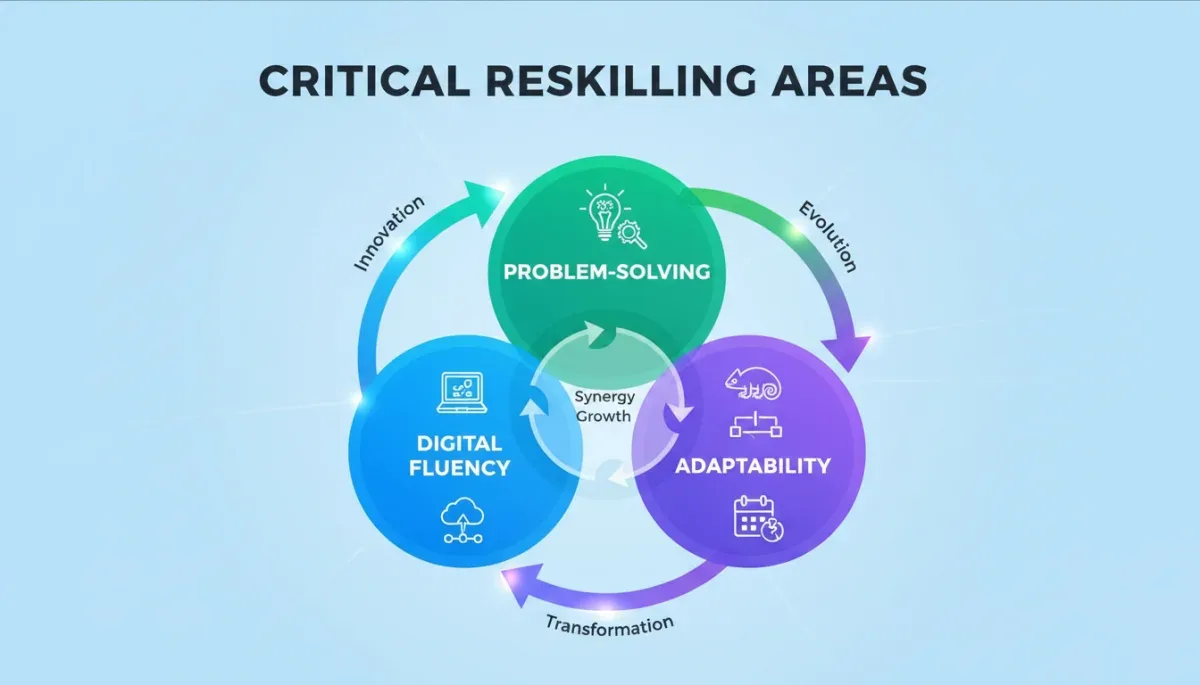
Focusing on three critical areas for reskilling workforces by mid-2026 is vital for navigating the pervasive impact of automation.
As the landscape of work continues its rapid transformation, understanding and implementing effective strategies for reskilling for automation by mid-2026 isn't merely advantageous; it's a fundamental necessity for both individuals and organizations.
Understanding the Automation Imperative
The relentless march of automation is reshaping industries and job functions at an unprecedented pace. From advanced robotics in manufacturing to sophisticated AI algorithms in customer service, automated systems are taking over routine and repetitive tasks, freeing human workers to focus on more complex, creative, and strategic endeavors. This shift isn't about job displacement as much as it is about job evolution, demanding a proactive approach to skill development.
The Economic and Social Impact
Automation's impact extends beyond the workplace, influencing economic growth, social structures, and educational systems. Governments, educational institutions, and businesses are increasingly recognizing the urgency of preparing the current and future workforce for this automated reality. Failure to adapt could lead to significant skill gaps, unemployment, and reduced competitiveness on a global scale. The good news is that with foresight and strategic investment, this transition can be managed effectively, turning potential challenges into opportunities for growth and innovation.
- Job Redefinition: Many roles are not disappearing but being redefined, requiring new skill sets.
- Productivity Gains: Automation can significantly boost productivity, driving economic expansion.
- Ethical Considerations: Discussions around AI ethics and automation's societal impact are becoming crucial.
Successfully navigating this automated future hinges on a collective commitment to continuous learning and adaptation. Organizations must invest in their employees, offering pathways for skill enhancement, while individuals must take ownership of their professional development. The imperative is clear: embrace the change, understand its implications, and proactively prepare for the evolving demands of the modern workplace.
Critical Area 1: Advanced Digital Fluency and Data Literacy
In an increasingly digitized world, advanced digital fluency and data literacy are no longer niche skills but foundational requirements. Automation thrives on data, and professionals who can understand, interpret, and leverage data will be invaluable. This goes beyond basic computer proficiency, encompassing a deeper understanding of digital tools, platforms, and analytical methods.
Navigating Complex Digital Ecosystems
Professionals need to be comfortable not just using software, but understanding how different digital systems interact, how data flows between them, and how to troubleshoot or optimize these processes. This includes familiarity with cloud computing, cybersecurity basics, and the ability to adapt quickly to new technologies. The goal is to move beyond being a mere user to becoming a strategic participant in the digital ecosystem.
- Cloud Computing: Understanding platforms like AWS, Azure, or Google Cloud.
- Cybersecurity Awareness: Protecting digital assets and sensitive information.
- Digital Collaboration Tools: Mastering tools for remote work and team projects.
Data literacy, on the other hand, involves the ability to read, work with, analyze, and argue with data. This includes understanding statistical concepts, being able to identify relevant data points, using data visualization tools, and drawing actionable insights from complex datasets. It's about transforming raw information into strategic intelligence that drives decision-making and innovation.
From Data to Decisions
The capacity to translate data into meaningful narratives and strategic decisions is a skill that automation cannot replicate. While AI can process vast amounts of data, human insight is crucial for contextualizing findings, identifying biases, and applying ethical considerations. This blend of technical proficiency and critical thinking makes data-literate individuals indispensable in automated environments. Developing these skills ensures that professionals can not only coexist with automation but also guide its implementation and interpret its outputs effectively. This first critical area sets the stage for a workforce that is not just reactive but proactive in leveraging technological advancements.

Critical Area 2: Enhanced Cognitive Flexibility and Problem-Solving
As automation handles predictable tasks, the demand for human cognitive flexibility and complex problem-solving abilities escalates. This involves the capacity to adapt to new situations, learn new concepts rapidly, and apply innovative thinking to challenges that lack clear solutions. These are the domains where human intelligence continues to hold a distinct advantage over even the most advanced AI.
Thinking Beyond the Algorithm
Cognitive flexibility means being able to switch between different thinking styles, consider multiple perspectives, and adjust strategies in response to changing information. In an automated world, this translates to an ability to troubleshoot novel issues that automation might create, to identify opportunities for process improvement that automation overlooks, and to pivot business strategies based on evolving market conditions. It's about thinking 'outside the box' when the 'box' itself is being constantly redefined by technology.
- Adaptive Learning: Quickly acquiring new knowledge and skills.
- Critical Thinking: Analyzing information objectively to form judgments.
- Creative Solutions: Developing innovative approaches to complex problems.
Problem-solving in this context is less about finding a single correct answer and more about navigating ambiguity. It requires a blend of analytical rigor, creativity, and resilience. Professionals will be called upon to address ill-defined problems, where the root causes are unclear, and the potential solutions are numerous and untested. This often involves collaboration, hypothesis testing, and a willingness to iterate and learn from failures.
The Human Element in Innovation
The human capacity for empathy, intuition, and abstract reasoning provides a powerful complement to automation's efficiency. While machines can execute tasks with incredible speed and accuracy, they often lack the contextual understanding and adaptive judgment needed for truly complex problem-solving. By cultivating enhanced cognitive flexibility and robust problem-solving skills, individuals can position themselves as indispensable architects of innovation, guiding organizations through the complexities of the automated future. This area emphasizes the unique contributions humans bring to a tech-driven workplace.
Critical Area 3: Advanced Social Intelligence and Collaboration
Even as machines become more sophisticated, the need for human social intelligence and effective collaboration skills remains paramount. Automation may handle tasks, but it cannot replicate the nuances of human interaction, negotiation, team dynamics, and leadership. These 'soft skills' become increasingly 'hard' to replace and are vital for successful integration of automated systems and fostering a productive work environment.
Building Bridges, Not Walls
Social intelligence encompasses emotional intelligence, communication, and the ability to build and maintain strong professional relationships. In an automated workplace, this means effectively communicating with diverse teams, including those working alongside AI, fostering an inclusive environment, and navigating intercultural differences. It's about creating a harmonious and efficient ecosystem where human and machine intelligences can synergize rather than clash.
- Emotional Intelligence: Understanding and managing emotions in oneself and others.
- Effective Communication: Clear, concise, and empathetic expression.
- Conflict Resolution: Mediating disagreements and finding common ground.
Collaboration skills, on the other hand, refer to the ability to work effectively with others towards a common goal. This is crucial for cross-functional teams, hybrid work models, and projects involving both human and automated agents. It requires active listening, constructive feedback, negotiation, and the ability to leverage diverse strengths within a group. As automation streamlines individual tasks, the value of collective human effort in strategic planning, innovation, and problem-solving only grows.
Leading in a Hybrid Environment
Leaders in an automated world will need exceptional social intelligence to motivate and manage hybrid teams, ensuring that human workers feel valued and empowered, even as their roles evolve. They will need to articulate vision, foster trust, and champion a culture of continuous learning. These skills are essential for navigating the complex human-machine interfaces that define the modern workplace, ensuring that technology serves humanity, rather than the other way around. This final critical area underlines the enduring importance of human connection and collective action in the face of technological advancement.
Strategies for Effective Reskilling Implementation
Implementing effective reskilling programs requires a multi-faceted approach involving individual initiative, organizational investment, and supportive policy frameworks. It's not enough to identify critical areas; there must be actionable strategies to cultivate these skills across the workforce. This involves continuous learning models, personalized training pathways, and a culture that embraces change and development.
Individual and Organizational Commitments
For individuals, this means taking proactive steps to identify skill gaps, seeking out learning opportunities, and adopting a mindset of lifelong learning. Online courses, certifications, and vocational training programs are readily available resources. For organizations, it means allocating budgets for training, creating internal academies, offering mentorship programs, and integrating skill development into performance reviews. Companies that invest in their employees' growth will not only retain top talent but also build a more resilient and adaptable workforce capable of navigating future disruptions.
- Micro-credentials: Short, focused courses for specific skills.
- Internal Mobility: Opportunities for employees to move into new roles.
- Partnerships: Collaborating with educational institutions for tailored programs.
Policy frameworks also play a crucial role, with governments and educational bodies needing to align curricula with future job market demands, provide incentives for businesses to invest in reskilling, and create accessible pathways for adult learners. The synergy between these three pillars—individual, organizational, and governmental—is essential for creating a truly effective reskilling ecosystem.
The Future Workforce: A Proactive Approach
The future workforce will be characterized by its agility, adaptability, and a symbiotic relationship with advanced technologies. A proactive approach to reskilling, focusing on the three critical areas of advanced digital fluency, enhanced cognitive flexibility, and advanced social intelligence, is not just a reactive measure to automation but a strategic investment in human potential. By prioritizing these skills, we are not simply preparing for a future where machines do more; we are shaping a future where humans can achieve more, leveraging technology to amplify their unique capabilities.
Embracing Continuous Evolution
The journey of reskilling is continuous, not a one-time event. As technology evolves, so too will the skills required to thrive alongside it. Organizations and individuals must embrace this ongoing evolution, fostering a culture of curiosity, experimentation, and perpetual learning. The goal is to build a workforce that is not only prepared for the challenges of automation but also empowered to drive innovation and create new opportunities in an ever-changing world. This forward-looking mindset ensures that the human element remains central to progress.
| Key Reskilling Area | Brief Description |
|---|---|
| Digital Fluency & Data Literacy | Proficiency in digital tools, platforms, and the ability to interpret and leverage data for strategic insights. |
| Cognitive Flexibility & Problem-Solving | Capacity to adapt to new situations, learn rapidly, and apply innovative thinking to complex, undefined challenges. |
| Social Intelligence & Collaboration | Mastery of human interaction, emotional intelligence, effective communication, and teamwork in hybrid environments. |
Frequently Asked Questions About Reskilling for Automation
Why is reskilling for automation so urgent by mid-2026?▼The pace of automation is accelerating rapidly, demanding immediate adaptation. By mid-2026, many routine tasks will be automated, requiring individuals and organizations to possess new skills to remain competitive and relevant in the evolving job market.
What does advanced digital fluency entail beyond basic computer skills?▼It involves a deeper understanding of digital ecosystems, including cloud computing, cybersecurity basics, and the ability to leverage digital tools strategically. It moves beyond simple usage to strategic application and optimization of digital processes for enhanced productivity.
How does cognitive flexibility differ from traditional problem-solving?▼Cognitive flexibility emphasizes adapting to new situations, learning new concepts rapidly, and applying innovative thinking to ill-defined problems without clear solutions. Traditional problem-solving often focuses on more structured, well-defined challenges, whereas this demands navigating ambiguity.
Why are social intelligence and collaboration still critical in an automated world?▼Automation cannot replicate human nuances like empathy, negotiation, or team dynamics. These 'soft skills' become vital for effective human-machine integration, fostering inclusive workplaces, and driving innovation through collective human effort in hybrid environments.
What steps can individuals take to begin reskilling?▼Individuals should identify skill gaps, seek online courses, certifications, and vocational training programs. Adopting a mindset of lifelong learning and proactively engaging with new technologies are crucial first steps toward future-proofing one's career.
Conclusion
The imperative to embrace reskilling for automation by mid-2026 is unmistakable. By strategically focusing on advanced digital fluency and data literacy, enhanced cognitive flexibility and problem-solving, and advanced social intelligence and collaboration, individuals and organizations can confidently navigate the evolving world of work. This proactive approach not only mitigates the risks associated with technological disruption but also unlocks new opportunities for innovation, growth, and human potential, ensuring a resilient and adaptable workforce for the future.