Quick Career Paths: Stability in 2026
Advertisements

Securing a stable professional future in 2026 means strategically identifying quick career paths that align with evolving market demands and offer consistent growth opportunities.
In today’s rapidly evolving job market, many individuals seek accelerated entry into professions that promise not just immediate employment, but also enduring security. Understanding the nuances of quick career stability is crucial for making informed decisions about your professional future. This article delves into various fast-track career options, evaluating their potential for long-term stability as we look towards 2026 and beyond, helping you choose a path that truly lasts.
Understanding the Demand: Key Sectors for 2026
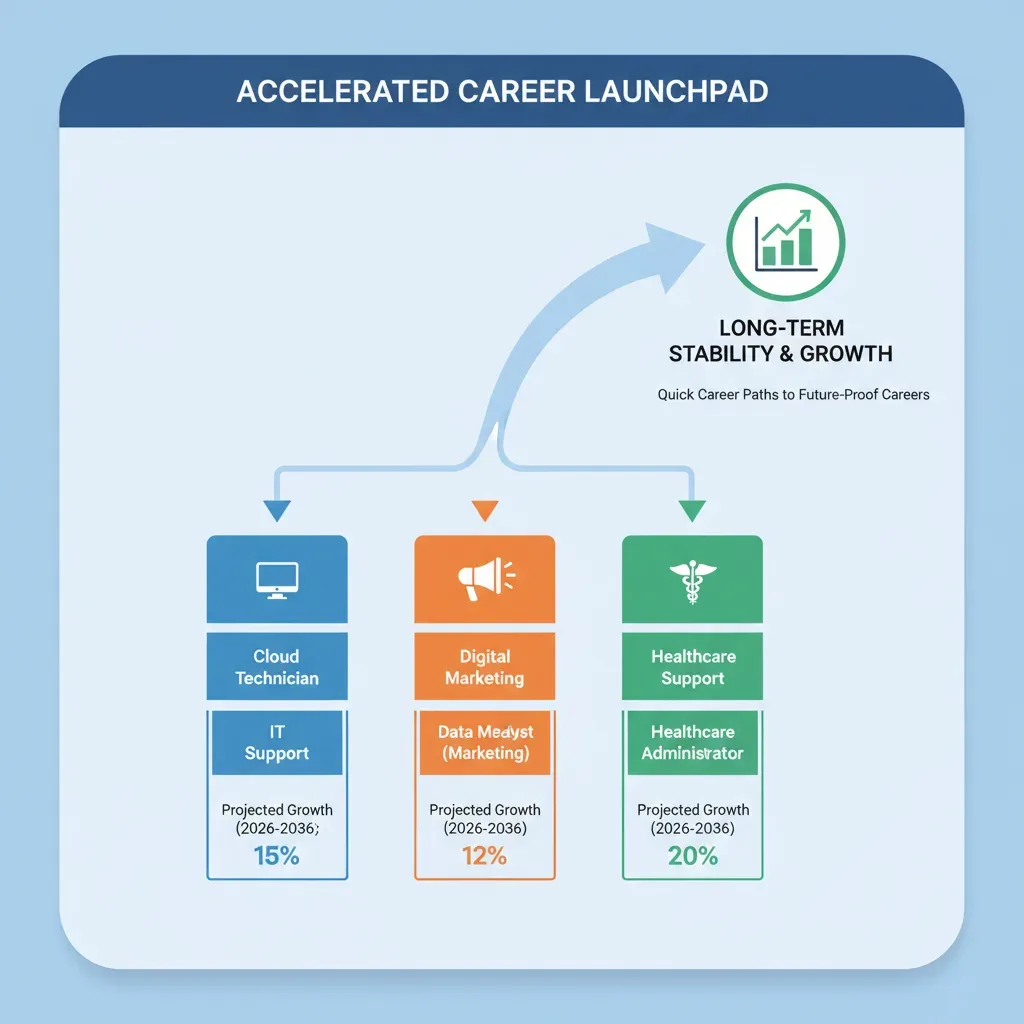
The landscape of employment is continuously shifting, driven by technological advancements, demographic changes, and global economic trends. Identifying sectors with sustained demand is the first step toward finding a quick career path with long-term stability. As we approach 2026, several industries stand out as offering robust opportunities for rapid entry and continued growth.
These sectors are not only expanding but also have a consistent need for skilled professionals, often with pathways that don’t require extensive multi-year degrees. Focusing on these areas can provide a competitive edge and a more secure professional trajectory.
Healthcare Support: A Growing Necessity
The healthcare industry remains one of the most resilient and consistently growing sectors. An aging population and advancements in medical science fuel an unceasing demand for various support roles. Many of these positions can be entered with certifications or associate’s degrees, making them ideal for quick career transitions.
- Medical Assistants: Handle administrative and clinical tasks in healthcare settings.
- Certified Nursing Assistants (CNAs): Provide direct patient care under the supervision of nurses.
- Phlebotomists: Draw blood for tests, transfusions, and donations.
- Dental Assistants: Support dentists during procedures and manage patient records.
These roles offer a foundational understanding of the healthcare system and often present opportunities for further specialization and advancement, contributing significantly to long-term stability.
The Rise of Technology-Driven Roles
Technology continues to revolutionize every aspect of our lives, creating an abundance of new job opportunities. Many tech roles, particularly in IT support and digital services, offer relatively quick entry routes through bootcamps, certifications, or self-taught skills. The dynamic nature of technology ensures continuous learning, which is a hallmark of long-term career stability.
These roles are not just about coding; they encompass a wide range of functions critical to modern business operations. The ability to adapt and acquire new skills within this sector is paramount for sustained success.
IT Support and Cybersecurity Fundamentals
Every business, regardless of its size, relies heavily on technology. This reliance translates into a constant need for IT professionals to manage, maintain, and secure systems. Entry-level IT support roles can be a springboard into more specialized and higher-paying positions, including cybersecurity, a field with rapidly escalating demand.
- Help Desk Technicians: Provide first-line technical assistance to users.
- Network Support Specialists: Maintain computer networks and resolve connectivity issues.
- Cybersecurity Analysts (Entry-Level): Monitor systems for threats and implement security measures.
With the increasing threat of cyberattacks, even foundational knowledge in cybersecurity is becoming an invaluable asset, ensuring a stable career path for years to come.
Digital Marketing and Content Creation
In an increasingly digital world, businesses are constantly striving to reach their audiences online. This has fueled a massive demand for digital marketing professionals and content creators. Many skills in this domain can be acquired through online courses, certifications, and practical experience, making it a quick entry point with high growth potential.
The beauty of digital marketing lies in its versatility and the constant evolution of tools and strategies. Professionals who stay current with trends in SEO, social media, and analytics will find their skills highly sought after.
Essential Digital Skills for Stability
A strong grasp of digital tools and strategies is crucial for success in this field. Employers often prioritize practical experience and a portfolio of work over traditional degrees, allowing for rapid skill acquisition and career entry.
- Social Media Management: Crafting and executing social media strategies.
- Search Engine Optimization (SEO): Optimizing content for higher search engine rankings.
- Content Writing/Marketing: Creating engaging written or visual content.
- Email Marketing: Developing and managing email campaigns.
These roles are not just about marketing products; they are about building brands and engaging communities, offering diverse opportunities for long-term career development.
Skilled Trades: Enduring Demand and High Earning Potential
While often overlooked in discussions about quick career paths, skilled trades offer remarkable long-term stability and excellent earning potential. These professions are essential to infrastructure and daily life, and the demand for qualified tradespeople consistently outstrips supply. Apprenticeships and vocational training programs provide a direct route to entry.
Unlike some office-based roles, many skilled trades cannot be easily outsourced or automated, providing a high degree of job security. The hands-on nature of the work appeals to many, and the satisfaction of building or repairing tangible items is a significant draw.
Pathways to Trade Proficiency
Vocational schools and apprenticeship programs are the primary avenues for entering skilled trades. These programs combine classroom instruction with on-the-job training, allowing individuals to earn while they learn and quickly become proficient.
- Electricians: Install and maintain electrical systems.
- Plumbers: Install and repair water, drainage, and gas systems.
- HVAC Technicians: Install and service heating, ventilation, and air conditioning systems.
- Welders: Join metals using various welding techniques.
The specialized knowledge and practical skills acquired in these trades ensure a robust and stable career, often with opportunities to start one’s own business.
Education and Training: Investing in Yourself
Regardless of the chosen quick career path, continuous education and upskilling are non-negotiable for long-term stability. The job market of 2026 will heavily favor individuals who are adaptable and committed to lifelong learning. Investing in certifications, workshops, and advanced training ensures that your skills remain relevant and in demand.
This commitment to personal and professional development is what truly distinguishes a temporary job from a stable career. Employers seek individuals who can evolve with the industry, embracing new technologies and methodologies.
Certifications and Micro-Credentials
Many quick career paths benefit immensely from industry-recognized certifications. These credentials validate specific skills and knowledge, often making candidates more attractive to employers and opening doors to higher-paying roles.
- CompTIA A+, Network+, Security+: Essential for IT support and cybersecurity.
- Google Analytics Certification: Crucial for digital marketing roles.
- SCRUM Master Certification: For project management and agile development.
- Specialized Healthcare Certifications: For roles like EKG technician or medical coder.
These focused learning opportunities provide a quick and effective way to enhance career prospects and secure long-term stability.
Strategic Career Planning for Lasting Stability
While the allure of quick entry is strong, the ultimate goal should be long-term stability. This requires strategic planning beyond the initial job placement. Consider not just the current demand but also the projected growth of the industry, opportunities for advancement, and the transferability of your skills. A stable career is built on a foundation of foresight and continuous adaptation.
Analyzing potential career paths through the lens of future-proofing ensures that your chosen quick entry point leads to sustainable professional growth, rather than a short-lived trend.
Factors for Evaluating Long-Term Potential
When selecting a quick career path, it’s vital to assess several key factors that contribute to enduring stability. A holistic view helps in making a decision that will serve you well for years to come.
- Industry Growth Projections: Research official labor statistics for anticipated job growth.
- Automation Resilience: Choose roles that are less susceptible to automation.
- Skill Transferability: Opt for skills that can be applied across different industries.
- Opportunities for Specialization: Look for paths that allow for advanced learning and niche expertise.
By carefully weighing these elements, individuals can confidently embark on quick career paths that offer genuine long-term stability in the dynamic job market of 2026.
| Key Aspect | Description for Stability |
|---|---|
| Healthcare Support | Consistent demand due to aging population and medical advancements; diverse roles with growth. |
| Tech & Digital | High demand in IT support, cybersecurity, and digital marketing; continuous learning ensures relevance. |
| Skilled Trades | Essential services with high demand, resistant to automation, and good earning potential. |
| Continuous Learning | Critical for adaptability and staying competitive across all quick career paths in evolving markets. |
Frequently Asked Questions About Career Stability
What defines a quick career path with long-term stability?▼A quick career path with long-term stability is one that offers relatively fast entry into the workforce, typically through certifications or short-term training, while also demonstrating consistent demand, growth potential, and resilience against economic shifts or automation for years to come.
Which industries are best for quick career stability in 2026?▼For 2026, healthcare support, technology (especially IT support and cybersecurity), digital marketing, and skilled trades are among the top industries offering quick entry points with strong long-term stability. These sectors are driven by fundamental societal needs and continuous innovation.
Are certifications more valuable than degrees for quick career entry?▼For quick career entry, certifications often provide a more direct and faster route to gaining specific, in-demand skills. While degrees offer broader knowledge, many employers increasingly value specialized certifications for entry-level roles, making them highly effective for rapid job placement and initial stability.
How can I ensure my quick career path remains stable over time?▼To ensure long-term stability, continuously invest in upskilling and learning new technologies relevant to your field. Network with professionals, seek mentorship, and be adaptable to industry changes. Proactive professional development is key to maintaining relevance and securing your position.
What role does automation play in quick career stability?▼Automation can impact job stability, making it crucial to choose quick career paths that involve human-centric skills, complex problem-solving, or hands-on tasks less susceptible to automation. Roles in healthcare or skilled trades, or those requiring creative and strategic thinking in tech, often offer greater resilience.
Embracing a Stable Future
As we navigate the complexities of the modern job market, the pursuit of quick career paths with long-term stability is a commendable and achievable goal. By focusing on high-demand sectors like healthcare, technology, digital marketing, and skilled trades, and committing to continuous learning, individuals can build resilient and rewarding professional futures. The key lies in strategic planning, adaptability, and a proactive approach to skill development, ensuring that your chosen path offers not just immediate employment, but enduring success and security.