Career Pivots 2026: 90-Day Transition Guide
Advertisements
A successful career pivot in 2026 requires a strategic 90-day plan encompassing self-assessment, skill acquisition, and targeted networking for a smooth transition.
Are you contemplating a significant professional shift? The landscape of work is continuously evolving, and mastering career pivots in 2026 is crucial for sustained growth and satisfaction. This guide offers a streamlined, step-by-step approach to navigate a successful career transition within 90 days, empowering you to seize new opportunities with confidence and clarity.
Understanding the Modern Career Pivot Landscape
The concept of a linear career path is increasingly becoming a relic of the past. Today, professionals are embracing career pivots not just out of necessity, but as a proactive strategy for personal and professional fulfillment. This section delves into the contemporary factors driving these shifts and the mindset required to approach them successfully.
In 2026, economic shifts, technological advancements, and evolving societal values continue to reshape industries, making adaptability a paramount skill. Many individuals are seeking roles that align more closely with their passions, offer greater flexibility, or provide opportunities for impact beyond traditional metrics. The rise of automation and artificial intelligence, for instance, has led many to consider roles that emphasize uniquely human skills like creativity, critical thinking, and emotional intelligence.
Key Drivers of Career Change Today
Several forces are at play in prompting individuals to consider a career pivot. Recognizing these drivers can help you understand your own motivations and the broader context of your transition.
- Technological Disruption: Automation and AI are transforming job markets, creating new roles while rendering others obsolete.
- Personal Values Alignment: A growing desire for work that reflects personal ethics, social impact, and a sense of purpose.
- Demand for Flexibility: The post-pandemic era has solidified the importance of work-life balance and remote work options.
- Skill Gaps and Opportunities: Identification of new, high-demand skills that open doors to entirely different industries.
Navigating these changes requires a strategic mindset. It's not about abandoning your past experiences, but rather leveraging them as a foundation for future growth. A successful pivot is often about transferring existing competencies and acquiring new ones, rather than starting entirely from scratch. This foundational understanding is the first step in preparing for a successful career pivot.
Phase 1: Self-Discovery and Vision (Days 1-30)
The initial month of your 90-day journey is dedicated to introspection and clarifying your vision. Before you can effectively pivot, you must understand where you are, where you want to go, and why. This phase is crucial for building a solid foundation for your transition.

Self-assessment goes beyond simply listing your skills. It involves a deep dive into your values, interests, strengths, and even your weaknesses. What truly energizes you? What problems do you enjoy solving? What kind of work environment allows you to thrive? Answering these questions honestly provides invaluable insights into potential new career paths that genuinely align with who you are.
Conducting a Thorough Self-Assessment
A structured approach to self-assessment can yield clearer results. Consider using a combination of methods to gain a comprehensive understanding of your profile.
- Strengths, Weaknesses, Opportunities, Threats (SWOT) Analysis: Apply this business tool to your personal career.
- Personality Assessments: Tools like Myers-Briggs or CliftonStrengths can offer insights into your natural inclinations.
- Values Clarification Exercises: Identify what truly matters to you in a professional context.
- Past Accomplishments Review: Document your achievements and identify transferable skills.
Once you have a clearer picture of yourself, begin to explore potential industries and roles that resonate with your findings. Research emerging fields, read industry reports, and identify roles that leverage your strengths while offering opportunities for growth in areas you find stimulating. This exploration should be broad initially, narrowing down as you gather more information and gain clarity on your true aspirations. This phase concludes with a clear, albeit perhaps still evolving, vision of your desired career direction.
Phase 2: Skill Acquisition and Networking (Days 31-60)
With a clear vision in mind, the second month shifts focus to building the necessary capabilities and connections for your desired pivot. This is where theoretical exploration transforms into practical preparation, making your transition tangible and achievable.
Identifying skill gaps is a critical step. Compare the skills you currently possess with those required for your target role. This might involve technical skills, soft skills, or industry-specific knowledge. Fortunately, 2026 offers an abundance of resources for rapid skill development, from online courses to bootcamps and micro-credentials.
Targeted Skill Development Strategies
Choosing the right learning pathway can accelerate your progress. Prioritize skills that are in high demand and directly applicable to your new career.
- Online Courses and Certifications: Platforms like Coursera, edX, and LinkedIn Learning offer flexible, accessible options.
- Bootcamps and Workshops: Intensive, short-term programs designed for rapid skill acquisition in specific areas.
- Mentorship and Apprenticeships: Learning directly from experienced professionals can provide invaluable practical insights.
Simultaneously, networking becomes paramount. It's not just about finding job opportunities, but about gaining insights, building relationships, and understanding the unwritten rules of your target industry. Attend virtual and in-person industry events, connect with professionals on LinkedIn, and conduct informational interviews. These conversations can reveal hidden job markets and provide crucial advice from those who have already navigated similar paths.
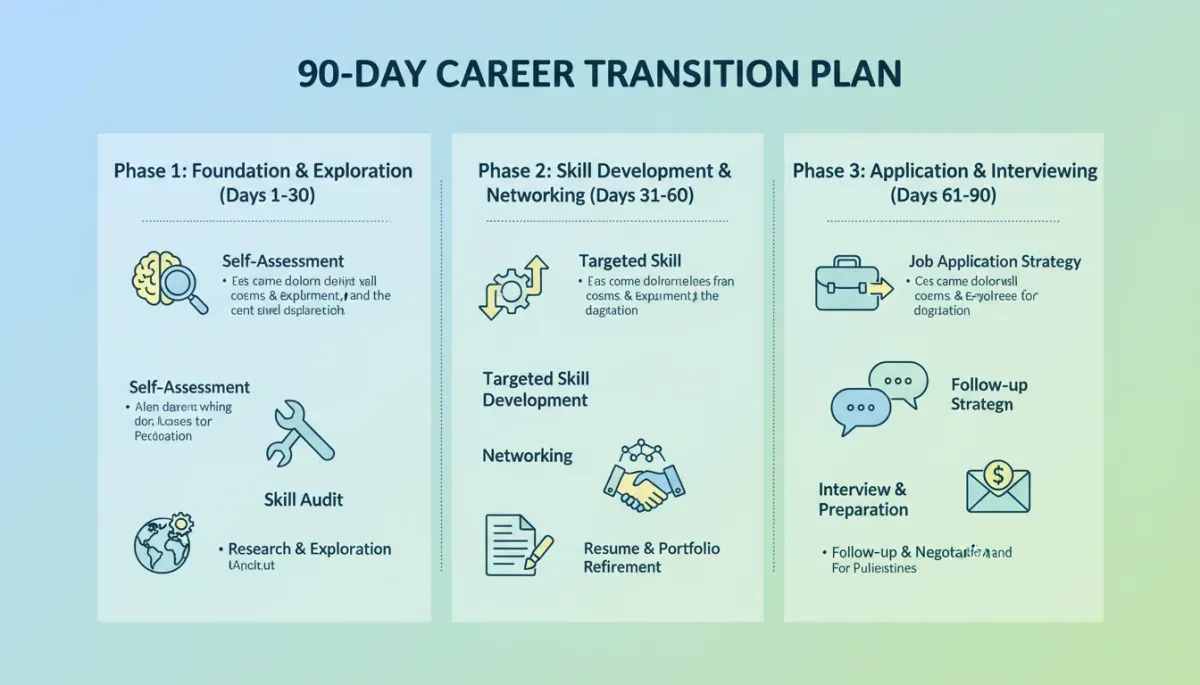
The goal of this phase is to not only acquire the necessary skills but also to validate your career choice through real-world interactions. By the end of day 60, you should feel more confident in your abilities and have a growing network of contacts to support your next steps. This concerted effort in skill development and networking lays a robust groundwork for the final push towards your new career.
Phase 3: Strategic Job Search and Transition (Days 61-90)
The final month is dedicated to actively pursuing your new career path. This involves refining your application materials, mastering interview techniques, and strategically positioning yourself for success in the job market. This is where all your preparation culminates into actionable steps.
Your resume and cover letter are your first impression. They must be tailored specifically to your target roles, highlighting your newly acquired skills and how your past experiences are transferable. Generic applications rarely yield results in a competitive market. Focus on demonstrating how your unique blend of experiences and new competencies makes you an ideal candidate.
Optimizing Your Application Materials
Crafting compelling application documents requires attention to detail and a clear understanding of what recruiters seek.
- Tailor Your Resume: Customize each application to match keywords and requirements in job descriptions.
- Develop a Strong Portfolio: If applicable, showcase your work through a professional online portfolio.
- Craft Compelling Cover Letters: Tell a story that connects your background to the new role and company mission.
- Optimize LinkedIn Profile: Ensure your profile reflects your new career aspirations and highlights relevant skills.
Interview preparation is equally vital. Research the companies you're applying to, practice common interview questions, and prepare insightful questions to ask your interviewers. Leverage your network for mock interviews and feedback. The transition isn't just about landing a new job; it's about making a smooth entry into your new professional environment. This phase emphasizes perseverance, strategic outreach, and continuous refinement of your approach. By the end of 90 days, you will be well-equipped to make a successful career pivot, having meticulously prepared for every step of the journey.
Leveraging Your Existing Network and Building New Connections
In any career pivot, your network is an invaluable asset. It's not just about who you know, but who knows what you're capable of and how they can advocate for you. This section explores how to effectively utilize your current connections while strategically expanding into new professional circles.
Start by identifying individuals within your existing network who might have connections or insights into your target industry. These could be former colleagues, mentors, or even acquaintances. Reach out to them for informational interviews, asking for advice and introductions rather than direct job leads. People are often more willing to help when they feel their expertise is valued.
Strategies for Expanding Your Professional Sphere
Building a new network requires intentional effort and a proactive approach. Focus on quality over quantity, aiming for meaningful connections.
- Industry Events and Conferences: Attend relevant virtual or in-person gatherings to meet new people.
- Professional Associations: Join organizations specific to your target industry for networking and learning opportunities.
- Online Communities: Engage in LinkedIn groups, forums, and specialized online platforms where professionals in your desired field congregate.
- Volunteer Work: Offer your skills to non-profits or projects within your new industry to gain experience and make connections.
Remember that networking is a two-way street. Be prepared to offer assistance and share your own insights when appropriate. Cultivating genuine relationships takes time and effort, but the returns, both in terms of information and potential opportunities, are immense. A robust network can provide mentorship, open doors to unadvertised positions, and offer critical support during your transition, making it a cornerstone of a successful career pivot.
Overcoming Challenges and Maintaining Momentum
A career pivot, even with a clear plan, is rarely without its hurdles. It's crucial to anticipate potential challenges and develop strategies to maintain motivation and momentum throughout your 90-day transition. Resilience and adaptability are key attributes for navigating this journey successfully.
One common challenge is dealing with self-doubt or imposter syndrome, especially when entering a new field. Remind yourself of your transferable skills, your commitment to learning, and the extensive preparation you've undertaken. Celebrate small victories along the way to reinforce your progress and boost your confidence. It’s also important to acknowledge that setbacks, such as rejections or unexpected delays, are a normal part of the process.
Strategies for Resilience and Sustained Effort
Proactive measures can help you stay on track and overcome obstacles effectively.
- Set Realistic Expectations: Understand that not every step will be smooth, and adjust your plan as needed.
- Seek Support: Connect with mentors, career coaches, or a peer support group to share experiences and gain perspective.
- Practice Self-Care: Ensure you're prioritizing your well-being through adequate rest, exercise, and stress-reducing activities.
- Stay Flexible: Be open to unexpected opportunities or slight adjustments to your target path if new information arises.
Maintaining momentum involves consistent effort and a clear focus on your end goal. Break down larger tasks into smaller, manageable steps to avoid feeling overwhelmed. Regularly review your progress against your 90-day timeline and make adjustments as necessary. By proactively addressing challenges and fostering a resilient mindset, you can navigate the complexities of a career pivot with greater ease and increase your chances of a successful transition. This sustained effort is what truly drives the pivot to fruition.
Post-Pivot Integration: Thriving in Your New Role
Successfully landing a new role is a significant achievement, but the journey doesn't end there. The period immediately following your career pivot is crucial for integration and establishing yourself in your new environment. This phase focuses on making a smooth transition and setting the stage for long-term success.
The first 90 days in a new role are often considered a critical period for proving your capabilities and understanding the company culture. Focus on active listening, asking clarifying questions, and observing team dynamics. Prioritize building relationships with your new colleagues and manager, seeking to understand their perspectives and how you can best contribute to shared goals.
Key Steps for Successful Integration
Strategic actions in your new role can accelerate your integration and impact.
- Active Learning: Immerse yourself in learning the company's processes, tools, and industry specifics.
- Build Relationships: Schedule one-on-one meetings with key colleagues to understand their roles and how you can collaborate.
- Seek Feedback: Proactively ask for constructive criticism to understand areas for improvement and demonstrate your commitment to growth.
- Identify Early Wins: Look for opportunities to make meaningful contributions, even small ones, to build confidence and demonstrate value.
Remember that your unique background from your previous career can be a significant asset. Don't shy away from bringing fresh perspectives and innovative ideas, but do so respectfully and after gaining a solid understanding of the existing context. Continuous learning remains essential; stay updated on industry trends and seek opportunities for further professional development within your new field. By strategically integrating and demonstrating your value, you can ensure your career pivot not only succeeds but also leads to sustained professional growth and satisfaction in your chosen path.
| Key Phase | Brief Description |
|---|---|
| Days 1-30: Self-Discovery | Introspection, values clarification, and vision setting for your new career path. |
| Days 31-60: Skill & Network | Acquire necessary skills and build connections in your target industry. |
| Days 61-90: Job Search | Refine applications, practice interviews, and actively pursue new roles. |
| Post-Pivot: Integration | Focus on learning, building relationships, and demonstrating value in your new role. |
Frequently Asked Questions About Career Pivots
How long does a typical career pivot take in 2026?▼While our guide focuses on a 90-day sprint, the actual duration can vary. Factors like the complexity of the pivot, required skill acquisition, and market demand influence the timeline. Some transitions might be quicker, while others, especially those requiring extensive retraining, could take longer than 90 days. This guide offers an accelerated framework.
What are the most in-demand skills for career pivots in 2026?▼In 2026, highly sought-after skills include data literacy, AI proficiency, cybersecurity knowledge, digital marketing, and advanced problem-solving. Soft skills like adaptability, emotional intelligence, critical thinking, and collaborative communication remain crucial across all industries, complementing technical expertise for a successful pivot.
Is it too late to make a career pivot in my 40s or 50s?▼Absolutely not. Age is less of a barrier than it once was. Employers increasingly value diverse experiences and perspectives. Older professionals bring a wealth of transferable skills, maturity, and a strong work ethic. Focus on highlighting these strengths and your enthusiasm for learning new areas to make a compelling case for your pivot.
How important is networking during a career transition?▼Networking is incredibly important, often more so than job boards alone. It provides insights into unadvertised roles, industry trends, and valuable mentorship. Building genuine connections can lead to referrals and endorsements, significantly increasing your chances of a successful pivot. It's about building relationships, not just collecting contacts.
What if my 90-day plan doesn't go exactly as expected?▼It's common for plans to evolve. The 90-day framework serves as a guide, not a rigid deadline. Be prepared to adapt, learn from setbacks, and revise your strategy. The key is to maintain momentum and stay committed to your goal. Flexibility and resilience are essential qualities for navigating any significant career change successfully.
Conclusion
Embarking on a career pivot can be one of the most transformative decisions of your professional life. By following this 90-day, step-by-step guide, you are not just changing jobs; you are strategically redesigning your professional trajectory to align with your evolving aspirations and the dynamic demands of 2026. This journey demands introspection, proactive skill development, diligent networking, and unwavering resilience. While challenges may arise, the structured approach outlined here empowers you to navigate them with confidence, ultimately leading to a fulfilling and successful transition into your new career. Your future self will thank you for taking these deliberate steps toward a more purposeful and rewarding professional life.