AI’s Impact on Certifications: Adapt by 2026
Advertisements
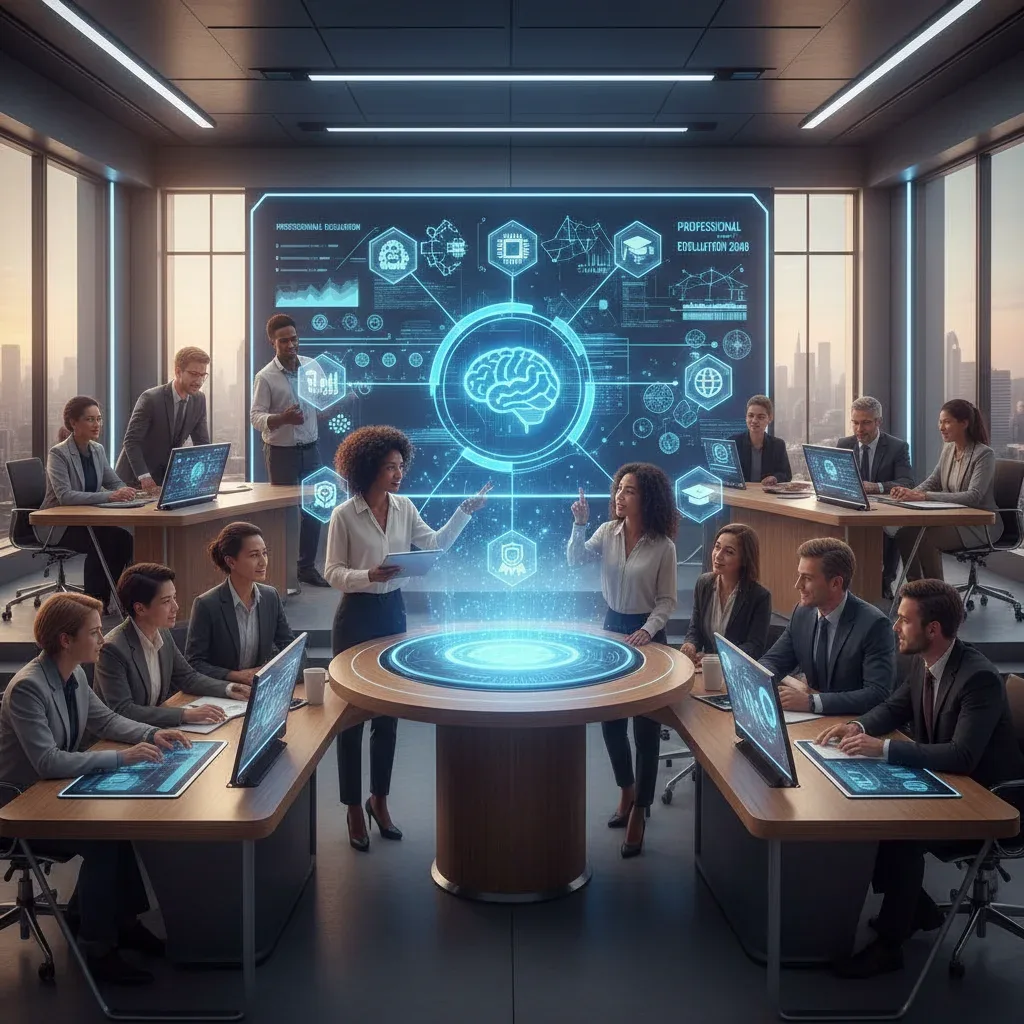
AI is rapidly reshaping professional certifications, demanding new skills and adaptive learning strategies to stay competitive and relevant in the evolving job market by 2026.
The landscape of professional development is undergoing a seismic shift, driven by the relentless advancement of artificial intelligence. Understanding AI Professional Certifications and their evolving nature is no longer optional but a critical imperative for career longevity and success. By 2026, the way we perceive, pursue, and utilize professional certifications will be fundamentally transformed, requiring a proactive approach to adaptation.
The Dawn of AI-Driven Certification
Artificial intelligence is not just a tool; it’s a catalyst reshaping industries and, consequently, the skills required to thrive within them. This profound change directly influences professional certifications, pushing them towards more dynamic, skill-focused, and often AI-integrated structures. Traditional certification models, while still valuable, are increasingly being augmented or even replaced by credentials that validate proficiency in AI-related domains or the application of AI in specific fields.
The shift is driven by the rapid obsolescence of certain skills and the emergence of new ones. Certifying bodies are scrambling to keep pace, designing programs that address machine learning, data science, AI ethics, and prompt engineering. This means that by 2026, a significant portion of highly sought-after certifications will involve some facet of AI, either as a core competency or as an essential enhancement to existing professional roles.
Rethinking Foundational Skills
As AI takes on more routine and analytical tasks, the demand for uniquely human skills, often called ‘soft skills,’ is escalating. Certifications are beginning to reflect this, incorporating modules on critical thinking, creativity, and emotional intelligence alongside technical proficiencies.
- Problem-solving in complex, ambiguous AI-driven scenarios.
- Ethical decision-making in AI development and deployment.
- Collaboration with AI systems and interdisciplinary teams.
- Adaptive learning and continuous skill acquisition.
The convergence of technical AI knowledge and these foundational human skills will define the most valuable certifications in the near future. Professionals who can bridge this gap will find themselves exceptionally well-positioned.
In essence, the initial impact of AI on certifications is creating a dual demand: for specialized AI expertise and for enhanced human capabilities that complement AI functionalities. This necessitates a strategic re-evaluation of educational pathways and professional development goals for anyone looking to stay relevant.
Emerging AI-Specific Certifications by 2026
The next few years will see an explosion of new certifications specifically designed to validate expertise in various AI disciplines. These are not merely extensions of existing IT certifications; they are distinct credentials reflecting the unique challenges and opportunities presented by AI technologies. Expect to see certifications from major tech companies, educational institutions, and specialized AI organizations.
These emerging certifications will cover a wide spectrum of AI applications, from foundational knowledge to highly specialized areas. They will demand hands-on experience and demonstrable project work, moving beyond theoretical understanding to practical application. The goal is to produce professionals who can immediately contribute to AI initiatives.
Key Areas of Specialization
Several domains within AI are ripe for specialized certification development. These include areas that are critical for both the creation and responsible deployment of AI systems.
- Machine Learning Engineering: Focusing on building, deploying, and maintaining ML models.
- AI Ethics and Governance: Addressing the responsible development and use of AI, including bias detection and fairness.
- Generative AI and Prompt Engineering: Proficiency in leveraging AI for content creation and optimizing AI interactions.
- AI Solutions Architecture: Designing and integrating AI into enterprise systems.
These specialized certifications will become the gold standard for hiring managers seeking specific AI talents. Professionals aiming for roles in AI development, deployment, or strategic oversight will find these credentials indispensable.
The proliferation of these AI-specific certifications underscores the growing maturity of the field and the increasing need for standardized validation of skills. By 2026, possessing one or more of these specialized credentials will be a strong indicator of a professional’s readiness for the AI-driven economy.
Adaptation Strategies for Professionals
Navigating the evolving certification landscape requires a proactive and strategic approach. Professionals must not only identify relevant new certifications but also develop a mindset of continuous learning and skill adaptation. Stagnation in the face of rapid technological change is no longer an option.
One key strategy is to audit current skills and identify gaps in relation to emerging AI trends within one’s industry. This self-assessment can guide decisions on which certifications to pursue. Furthermore, focusing on transferable skills that complement AI capabilities will enhance career resilience.
Continuous Learning and Reskilling
The concept of a static career path is rapidly becoming obsolete. Professionals must embrace lifelong learning, continually updating their skill sets to remain competitive.
- Enroll in online courses and micro-credentials in AI and related fields.
- Participate in workshops and bootcamps focused on practical AI applications.
- Seek mentorship from AI experts and engage in AI-focused communities.
- Dedicate time weekly to learning new AI tools and frameworks.
Reskilling is not just about learning new technical skills; it’s also about developing the cognitive flexibility to adapt to new paradigms. Certifications will serve as milestones in this ongoing journey, validating new competencies as they are acquired.
Ultimately, successful adaptation hinges on a willingness to embrace change and invest in personal and professional growth. By 2026, professionals who have actively engaged in reskilling and pursued relevant AI certifications will be at a distinct advantage in the job market.
The Role of AI in Certification Delivery and Assessment
Beyond influencing the content of certifications, AI is also transforming how certifications are delivered, assessed, and maintained. AI-powered platforms are making learning more personalized, efficient, and accessible, while AI-driven assessment tools are enhancing the integrity and relevance of credentialing processes. This dual impact means a more dynamic and responsive certification ecosystem.
Adaptive learning platforms, powered by AI, can tailor educational content to individual learning styles and paces, ensuring a more effective learning experience. This personalization can significantly reduce the time and effort required to prepare for complex certifications.
AI-Enhanced Assessment Methods
AI is revolutionizing how we validate skills, moving beyond traditional multiple-choice exams to more sophisticated, performance-based assessments.
- AI-Proctored Exams: Ensuring exam integrity through advanced monitoring.
- Performance-Based Simulations: Assessing practical skills in realistic AI environments.
- Automated Grading of Projects: Providing immediate feedback on coding and AI model development.
- Continuous Skill Validation: AI systems can track and validate ongoing skill development over time.
These AI-enhanced assessment methods will lead to more robust and credible certifications. By 2026, candidates will likely encounter more interactive and adaptive examination formats, requiring genuine mastery rather than rote memorization.
The integration of AI into certification delivery and assessment signifies a move towards more effective and trustworthy credentialing. This benefits both learners, who receive better instruction, and employers, who can rely on the validity of certifications.
Impact on Traditional Certifications and Industries
While AI creates new certification opportunities, it also profoundly impacts traditional certification pathways. Some existing certifications may become less relevant, while others will need significant updates to incorporate AI components. Industries that have historically relied on stable, long-standing certifications are now facing pressure to modernize their credentialing frameworks.
The legal, medical, and financial sectors, for example, are grappling with how to integrate AI ethics, data privacy, and automated decision-making into their professional standards. Certifications in these fields will increasingly require knowledge of AI’s implications and how to manage them responsibly.
Re-evaluation and Modernization
Many established certifying bodies are already engaged in a process of re-evaluation, assessing how AI impacts their respective domains and what new competencies their certifications should cover.
- Updating curriculum to include AI tools and methodologies.
- Developing specialized AI tracks within existing certifications.
- Collaborating with AI experts to ensure relevance and accuracy.
- Phasing out certifications for skills largely automated by AI.
This modernization effort is crucial for maintaining the value and credibility of traditional certifications. Those that fail to adapt risk becoming obsolete, leaving professionals with credentials that no longer reflect current industry demands.
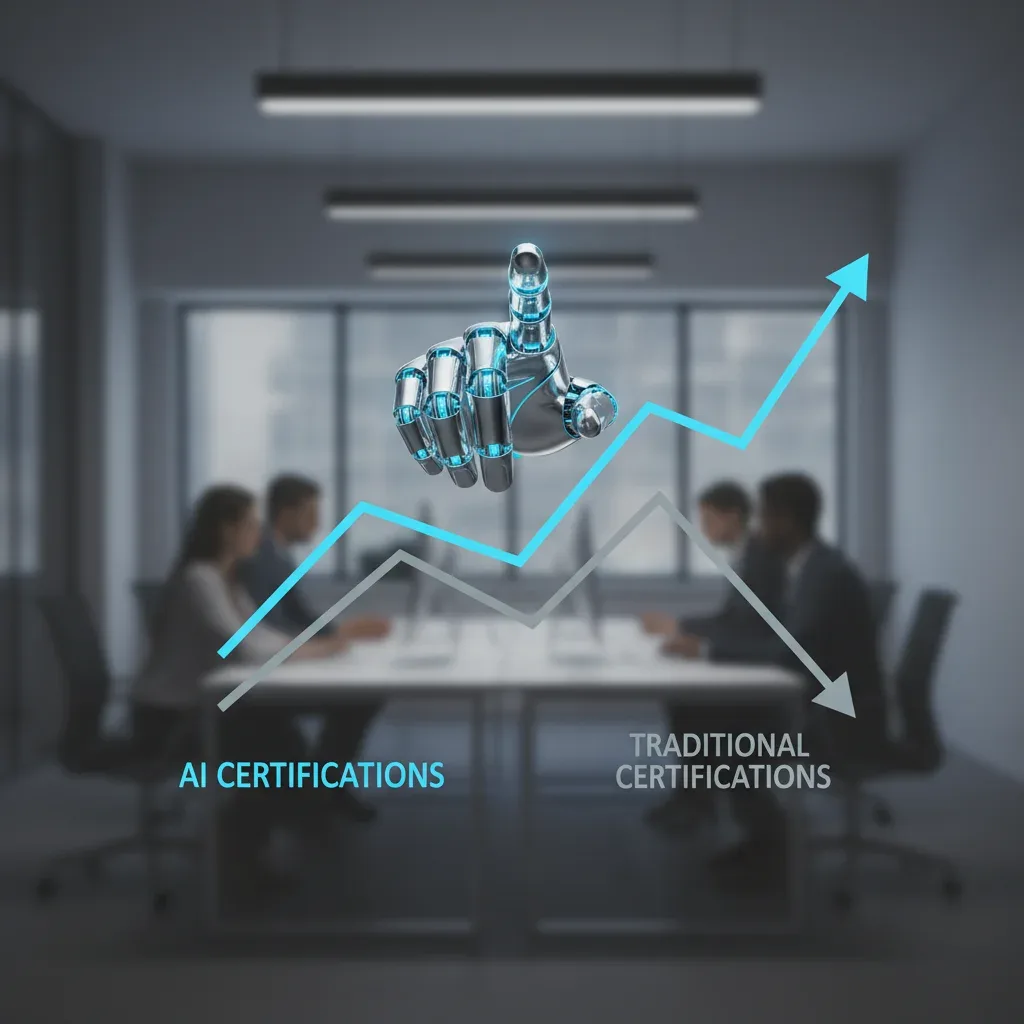
By 2026, expect a clear bifurcation: traditional certifications that have successfully integrated AI will remain strong, while those that haven’t will diminish in value. Professionals holding older certifications should actively seek updates or complementary AI credentials.
Preparing for the Certification Landscape of 2026
To thrive in the evolving professional landscape, proactive preparation is essential. Professionals need to develop a strategic roadmap for their learning and certification journey, focusing on areas with high growth potential and those that complement their existing expertise. This foresight will be critical in securing opportunities in an increasingly AI-driven job market.
Begin by researching industry reports and forecasts to identify in-demand skills and emerging certification trends. Network with professionals in your desired field to gain insights into the most valuable credentials. Consider micro-credentials or specialized courses as stepping stones to larger certifications.
Strategic Steps for Future-Proofing Your Career
Adopting a multi-faceted approach to professional development will ensure readiness for the changes expected by 2026.
- Identify AI’s Role in Your Industry: Understand how AI is specifically impacting your sector and what skills are becoming critical.
- Prioritize Hybrid Skills: Focus on certifications that combine technical AI knowledge with human-centric skills like critical thinking and ethics.
- Leverage Online Learning Platforms: Utilize MOOCs and specialized platforms for flexible and accessible learning opportunities.
- Engage in Practical Projects: Apply theoretical knowledge through hands-on projects to build a demonstrable portfolio.
The goal is not just to collect certifications but to build a robust and adaptable skill set that positions you as an indispensable asset in any organization. By 2026, continuous skill development and strategic certification acquisition will be hallmarks of successful professionals.
Taking these strategic steps now will equip professionals to not only withstand the changes brought by AI but to actively leverage them for career advancement and innovation. The future belongs to those who are prepared to learn and adapt.
| Key Aspect | Description by 2026 |
|---|---|
| AI-Specific Certifications | Explosion of credentials in ML, AI ethics, generative AI, and solutions architecture. |
| Traditional Certifications | Require significant updates to integrate AI, or risk obsolescence. |
| AI in Assessment | AI-powered platforms for personalized learning and performance-based assessments. |
Frequently Asked Questions About AI and Professional Certifications
How will AI change the value of existing professional certifications?▼Existing certifications will either need to integrate AI components to remain relevant or risk diminishing in value. Those that adapt by including AI ethics, tools, or applications will likely retain their importance, while others for tasks easily automated by AI may become less critical, pushing professionals towards new, AI-focused credentials.
What new AI certifications should professionals consider by 2026?▼Professionals should consider certifications in areas like Machine Learning Engineering, AI Ethics and Governance, Generative AI and Prompt Engineering, and AI Solutions Architecture. These specialized credentials validate skills crucial for developing, deploying, and managing AI technologies across various industries, offering significant career advantages.
How can I adapt my career to the AI-driven certification landscape?▼Adaptation requires continuous learning, reskilling, and focusing on hybrid skills that combine technical AI knowledge with human strengths like critical thinking and creativity. Engaging in online courses, workshops, and practical projects, while networking with AI experts, will help future-proof your career and validate new competencies effectively.
Will AI replace the need for human-led professional development?▼AI will not replace human-led professional development but will augment and enhance it. AI-powered platforms will offer personalized learning paths and adaptive assessments, making development more efficient. However, human mentorship, ethical discussions, and the cultivation of soft skills will remain crucial, complementing AI’s capabilities in the learning process.
What role will AI play in assessing professional competencies?▼AI will revolutionize assessment by enabling adaptive testing, real-time feedback on practical projects, and continuous skill validation. AI-proctored exams and performance-based simulations will become standard, ensuring greater integrity and relevance in evaluating professional competencies, moving beyond traditional memorization to practical application.
Conclusion
The transformative impact of AI on professional certifications by 2026 is undeniable, ushering in an era where continuous learning and strategic skill acquisition are paramount. Professionals must proactively engage with emerging AI-specific credentials and ensure their existing certifications are updated to remain relevant. By embracing this evolution, individuals can not only navigate the changes but also leverage them to forge robust and future-proof career paths in an increasingly AI-driven world.